Thanksgiving Stuffing: the Ultimate Sage, Sausage, and Apple Showstopper
- The Ultimate Thanksgiving Stuffing: Why This Recipe is Essential
- Flavor Science: The Secret to Deeply Satisfying Stuffing
- Essential Components for the Perfect Thanksgiving Stuffing
- Essential Components: Ingredients and Substitutions
- Step-by-Step Method: Assembling and Baking Your Stuffing
- Troubleshooting Your Stuffing: Chef’s Tips and Avoiding Common Pitfalls
- Make-Ahead Strategies and Storing Leftover Holiday Stuffing
- Perfect Pairings for Your Sage, Sausage, and Apple Thanksgiving Stuffing
- Recipe FAQs
- 📝 Recipe Card
The Ultimate Thanksgiving Stuffing: Why This Recipe is Essential
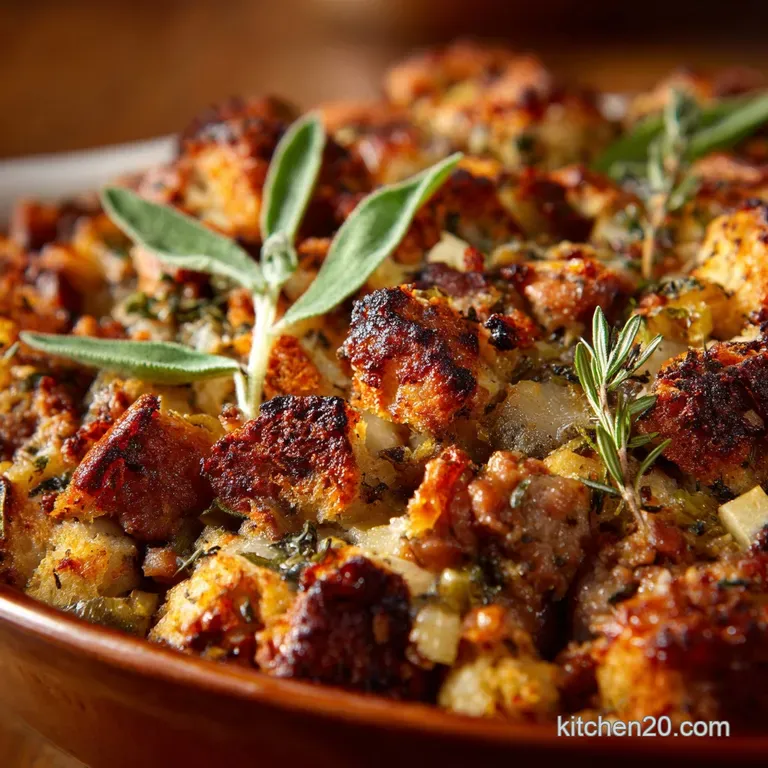
That smell? Oh my gosh, when this stuffing is baking, your kitchen transforms into pure holiday comfort. We're talking deeply savory pork sausage mingling with earthy sage, cut through by a tart hint of apple.
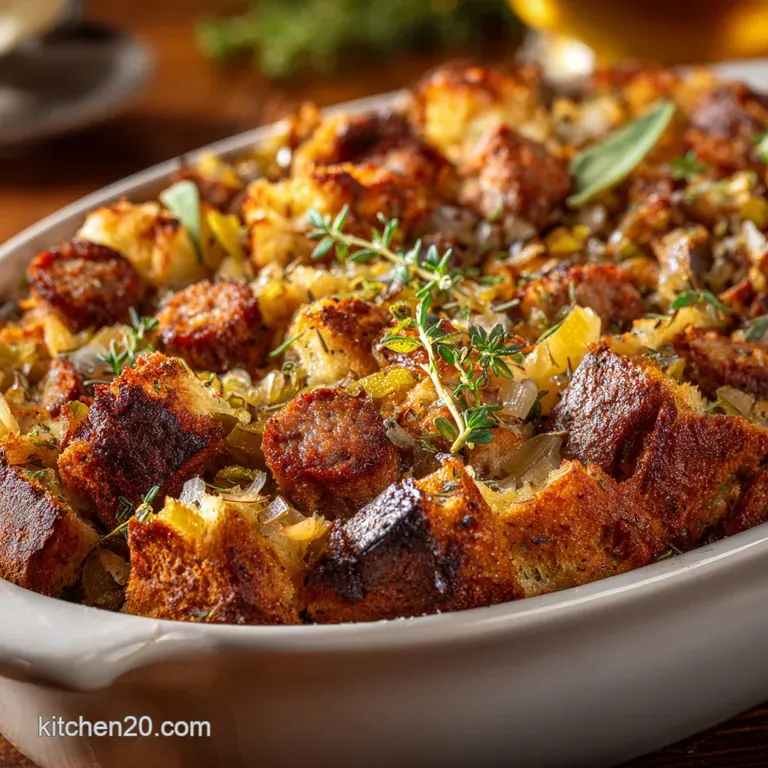
The ideal stuffing (or dressing, let's not fight) needs two things: a crackly, golden top and an unbelievably moist, tender interior. This recipe delivers both.
I used to think stuffing was hard, or maybe just boring a necessary but forgettable side dish. I was so wrong. This version is fast, surprisingly cheap to scale up for a crowd, and honestly, it’s a total lifesaver because you can assemble it a day ahead.
No last minute panic required on Thanksgiving morning.
This isn’t just a random assortment of dried bread and sadness; this is a layered flavor powerhouse built on decades of kitchen mistakes and triumphant fixes. Ready to upgrade your holiday game? Let’s crack on and make the best Thanksgiving stuffing you’ve ever tasted.
Flavor Science: The Secret to Deeply Satisfying Stuffing
This recipe works because we build flavor foundationally, starting with fat and finishing with acid. We focus on texture contrast so you never get that dense, homogenous brick of bread most people dread. Trust me, every step here has a purpose, from drying the bread to rendering the sausage fat completely.
The Difference Between Stuffing and Dressing (And Why It Matters)
Okay, let’s settle the argument right now. Technically, "stuffing" is cooked inside the turkey cavity, and "dressing" is baked outside in a casserole dish. I’m calling this stuffing because the ingredients are traditionally stuffing ingredients, but for safety reasons, we are baking this outside the bird. It creates a vastly superior crispy crust, which is the main goal here. You get maximum texture contrast this way. If you prefer the deeply saturated texture of the in-bird variety, you might love my method for MakeAhead Thanksgiving Dressing: Sage and Pecan, Moist Crispy Top .
Mastering the Crispy Top and Moist Interior Texture
The secret lies entirely in the bread prep and the baking method. You need dry, sturdy bread cubes that act like sponges, absorbing the rich, buttery stock without dissolving into a mushy paste.
We cover the dish initially to steam the interior until it’s perfectly tender, and then we remove the foil for the last 15 minutes to generate that glorious, deep golden crust.
The Signature Flavor Profile: Sage, Apple, and Savory Sausage Harmony
This combination is classic for a reason; it just works. The sausage provides rich, salty depth, while the generous amount of fresh sage screams "holiday." We counter that richness with a Granny Smith apple, which adds a necessary bright tartness that prevents the whole dish from becoming too heavy or greasy.
Building the Base: Rendering Sausage Fat for Maximum Depth
Don't just sauté the sausage until it’s cooked; you need to render the fat . This step browns the meat properly and leaves you with flavorful drippings that we then use to cook the celery and onion.
This essentially infuses the aromatics with the savory goodness of the pork right from the start.
The Role of Aromatic Vegetables (Mirepoix) and Fresh Herbs
Onion and celery (the classic mirepoix base) create a flavorful background that supports the stronger sage and pork. We sauté them until they are completely translucent and tender never browned. Use fresh herbs!
Dried sage tastes dusty; fresh sage is pungent, earthy, and vital for that true holiday punch.
Balancing Acidity and Sweetness with Tart Apples
The apple is optional, but honestly, it makes the dish spectacular. When you’re dealing with rich butter, fatty sausage, and carb heavy bread, you need something sharp to lift the palate. Granny Smiths hold their shape better than sweeter apples and offer that beautiful tart counterpoint.
Essential Components for the Perfect Thanksgiving Stuffing
This is where we get specific about the ingredients that matter most.
Selecting the Right Bread: Density and Crumb Structure
You need a sturdy bread not that flimsy white sliced stuff. Sourdough, rustic Italian loaves, or a good French boule are ideal because they have a tight crumb and hold their shape even when saturated. We’re aiming for a stuffing with texture, not porridge. If you want a full guide on the bread texture, check out my recipe for Homemade Stuffing: Crispy Sourdough Stuffing for Turkey Dinner .
Staling vs. Oven Drying: Achieving Optimal Moisture Absorption
Stale bread isn't dry enough; it just means it's old. We need the bread cubes to be hard and completely desiccated. Spread your 1 inch cubes on baking sheets and leave them uncovered on the counter for 12– 24 hours.
If you forgot (we’ve all been there), toast them in a low oven (300°F / 150°C) for 15 minutes until they feel genuinely hard and rattle when you shake them.
Choosing Your Sausage: Sweet Italian vs. Hot Breakfast Blends
I love using a high-quality bulk pork sausage, typically a mild Italian style. It has fennel and seasoning that marry beautifully with the sage. If you like heat, substitute a spicy Italian sausage or even a hot breakfast blend for a delicious kick.
Avoid pre-cooked sausages or heavily smoked varieties, as they can make the stuffing too dry or overpower the herbs.
Stock Selection and Liquid Ratio Management
Low-sodium chicken stock is mandatory. Why low-sodium? Because the sausage and butter are already adding plenty of salt, and we want control. The absolute trickiest part of Thanksgiving stuffing recipes is the liquid ratio. The goal is complete saturation but no pooling.
Start with 3 cups of warm stock, mix gently, and only add the fourth cup if the bread still feels stubbornly dry after a 5 minute rest.
Chef’s Note: Never use cold stock! Warm stock is absorbed immediately and evenly by the dry bread, leading to a much better texture than cold liquid, which creates pockets of soggy bread mixed with dry centers.
Essential Components: Ingredients and Substitutions
Here are the heavy hitters and how to swap them if you're in a pinch.
| Ingredient | Amount | Substitution Hack |
|---|---|---|
| Rustic Sourdough Bread | 1.5 lb loaf, cubed | Use cornbread for a sweeter stuffing; just ensure it is equally dry. |
| Bulk Pork Sausage | 1 lb | Use 1 lb of plain ground pork and add 1 tsp dried fennel seeds, plus extra salt and pepper. |
| Unsalted Butter | 1/2 cup | Use reserved rendered fat from the turkey (schmaltz) or high-quality olive oil, but the butter flavor is key! |
| Fresh Sage | 1/4 cup | No fresh sage? Try 1 Tbsp dried rubbed sage (use less, it’s potent). |
| Low-Sodium Chicken Stock | 3 4 cups | Vegetable stock works great, especially if you want a fully vegetarian stuffing base. |
| Granny Smith Apple | 1 large | Skip it, or use dried cranberries soaked in a tablespoon of orange juice for 10 minutes instead. |
step-by-step Method: Assembling and Baking Your Stuffing
Preparing the Components Up to 24 Hours in Advance
- Dry the Bread: Cube the bread (1 inch pieces) and let it air-dry for at least 12 hours. If you're short on time, bake the cubes at 300°F (150°C) for 15 minutes until hard. Place dry bread into your largest mixing bowl.
- Brown the Sausage: Melt 2 tablespoons of butter in a large skillet over medium high heat. Add the sausage meat, breaking it up completely. Cook until deeply browned and slightly crispy. Crucial Tip: Drain off the excess fat, but keep about 2 tablespoons in the pan for the vegetables. Add the cooked sausage to the dry bread.
- Sauté Aromatics: Return the skillet to medium heat and melt the remaining butter. Add the diced onion and celery. Sauté gently for 6– 8 minutes until they are totally soft and translucent. Stir in the diced apple, fresh sage, and thyme. Cook for two minutes until the sage is insanely fragrant.
- Combine the Mix: Pour the aromatic vegetable and butter mixture over the bread and sausage. Toss gently but thoroughly to coat the bread cubes with all the glorious fat and herbs.
Gentle Mixing: Ensuring Even Saturation Without Mushing the Bread
- Bind and Moisten: Whisk the eggs with the salt, pepper, and nutmeg. Pour this over the bread mixture and toss again. Gradually pour in 3 cups of warm stock, tossing carefully. The bread should feel heavy and softened, but there shouldn’t be a liquid puddle. If it’s too dry, add the remaining cup of stock.
- Rest and Transfer: Let the mixture rest in the bowl for 5 minutes; this allows the bread to fully soak up the liquid. Transfer the stuffing to a greased 9x13 inch baking dish. Do not press the stuffing down. Keep it light and fluffy for maximum crust formation.
Achieving the Ideal Internal Temperature and Golden Crust
- Bake (Covered): Cover the dish tightly with foil and bake in a preheated oven at 375°F (190°C) for 30 minutes. This steam cooks the inside and keeps it perfectly moist.
- Bake (Uncovered): Remove the foil and bake for another 15– 20 minutes. Watch closely until the top is deeply golden brown and crispy.
- Serve: Let it rest for 5 minutes out of the oven before serving piping hot.
Troubleshooting Your Stuffing: Chef’s Tips and Avoiding Common Pitfalls
We’ve all served a dry block or a watery disaster. Here are the simple fixes for your Thanksgiving stuffing casserole .
Why Your Stuffing is Too Dry (And How to Fix It Mid-Bake)
Dry stuffing usually means you didn't add enough stock, or the bread wasn't properly covered during the initial bake. If you find it’s too dry halfway through the covered bake time (around 15 minutes in), gently lift the foil and pour 1/4 cup of warm stock right over the top.
Immediately re-cover it tightly and continue baking.
Preventing Sogginess: The Danger of Oversaturating the Bread
If your stuffing is soggy, you likely used bread that wasn’t dry enough, or you dumped in too much stock at once. The moment you see liquid pooling at the bottom of your mixing bowl, stop adding stock immediately. The eggs help bind it, but if it’s swimming, you’re stuck with a mushy interior.
Next time, remember: dry bread is the foundation.
make-ahead Strategies and Storing Leftover Holiday Stuffing
The beauty of this Thanksgiving stuffing recipe easy is how well it handles advance prep.
Preparing the Components Up to 24 Hours in Advance
You can fully assemble the stuffing (steps 1 6), transfer it to the baking dish, and cover it tightly with plastic wrap and foil. Store it in the fridge overnight. When you’re ready to bake, let it sit on the counter for 30 minutes to take the chill off before placing it in the oven.
You might need 5 10 extra minutes of bake time.
Reheating Baked Stuffing Without Drying It Out
Leftover Thanksgiving stuffing balls recipe (if you rolled some) or the casserole slices reheat best in the oven. Place the leftovers in an oven safe dish, sprinkle a tablespoon of stock or water over the top, cover tightly with foil, and heat at 350°F (175°C) until warmed through (about 20 minutes).
The foil keeps the moisture in.
Freezing Unbaked Versus Baked Stuffing Safely
It freezes beautifully. You can freeze the fully assembled but unbaked stuffing (covered tightly) for up to 3 months. Thaw it overnight in the fridge and bake as directed. Baked leftovers freeze well too; wrap portions tightly in foil and transfer to a freezer bag. Reheat covered, adding a splash of stock.
Perfect Pairings for Your Sage, Sausage, and Apple Thanksgiving Stuffing
This rich side dish deserves great company!
Complementary Condiments and Cranberry Sauce Options
The sharp acidity of cranberry sauce is a non-negotiable partner for this rich, savory stuffing. You need that tart brightness to cut through the fat. A homemade gravy, especially one thickened with turkey drippings, poured generously over the top is also magnificent.
Pairing This Rich Side Dish with Turkey or Ham
While it’s the perfect accompaniment to the main turkey event, this Thanksgiving stuffing with sausage is also robust enough to stand up to a glazed holiday ham. The sausage and sage complement the savory sweet notes of ham flawlessly. If you need other side dish inspiration, you should check out the Thanksgiving Side Dishes: Crispy Brown Butter Maple Brussels Sprouts .
Wine and Beverage Recommendations for the Ultimate Thanksgiving Dinner
You want a wine that handles both the richness of the sausage and the earthy sage. Look for a light to medium bodied red, like a bright Beaujolais or a slightly chilled Pinot Noir. If you prefer white, a dry Riesling offers enough acidity to cleanse the palate beautifully between bites.
For non-drinkers, sparkling apple cider mimics the festive, acidic quality of wine.
Recipe FAQs
Why is my stuffing dry and crumbly, and how can I fix it?
Stuffing becomes dry when the bread has absorbed all the fat and liquid without proper saturation. To troubleshoot, you need to add more liquid start with an extra 1/4 cup of warm chicken or turkey broth drizzled evenly over the mixture before baking.
If it is already baked, cover the pan tightly with foil and add 2 tablespoons of melted butter, allowing it to steam for 15 minutes to reintroduce moisture.
Can I prepare this Sage, Sausage, and Apple Stuffing ahead of time?
Yes, you can efficiently manage your holiday timeline by preparing the foundational ingredients in advance. Sauté the sausage, apples, and aromatics, and mix them with the dry bread cubes up to 24 hours ahead of time.
However, wait to add the chicken broth and eggs until you are ready to transfer the mixture to the baking dish and cook it immediately.
What is the difference between Stuffing and Dressing?
The culinary difference lies purely in the preparation method and location during cooking. Stuffing is cooked inside the cavity of the turkey, whereas Dressing is prepared separately in a baking dish.
We recommend preparing this recipe as a Dressing to ensure it bakes evenly and safely reaches the required internal temperature of 165°F (74°C).
How do I store and reheat leftover stuffing?
Store leftover stuffing in an airtight container in the refrigerator for up to three days. To reheat, place the stuffing in a baking dish covered with foil to retain moisture and bake at 350°F (175°C) until it is piping hot throughout.
Alternatively, you can reheat portions in a skillet with a little butter to achieve wonderfully crispy edges.
I need a vegetarian or vegan variation. What substitutions should I make?
To make this recipe vegetarian, simply omit the sausage and replace the chicken broth with a rich vegetable or mushroom stock. For a vegan preparation, follow the vegetarian substitutions and replace the eggs with a flax egg binder or a small amount of unsweetened plant based milk to achieve the desired moistness and texture.
Consider adding roasted chestnuts or bulked-up mushrooms for a similar savory heartiness.
What type of bread yields the best texture for this stuffing?
For superior texture, always use a dense, crusty bread like sourdough, French bread, or pain de campagne that has been thoroughly dried out or left stale. These types hold their structure when saturated with liquid, ensuring a moist interior without becoming mushy or gummy.
If you use soft sandwich bread, you must toast the cubes rigorously until they are golden brown and hard before mixing.
My stuffing came out too soggy how can I prevent that next time?
Sogginess is a result of having too much liquid relative to the bread's capacity to absorb it, or using bread that wasn't stale enough. Ensure you measure the broth precisely, and if the mixture looks excessively wet before baking, remove a scoop and press it lightly to release any excess liquid.
Next time, try baking a small test portion for 15 minutes before mixing the entire batch to confirm the liquid level is perfect.
Ultimate Sage Apple Thanksgiving Stuffing
Ingredients:
Instructions:
Nutrition Facts:
| Calories | 375 kcal |
|---|---|
| Fat | 20 g |
| Fiber | 3 g |
