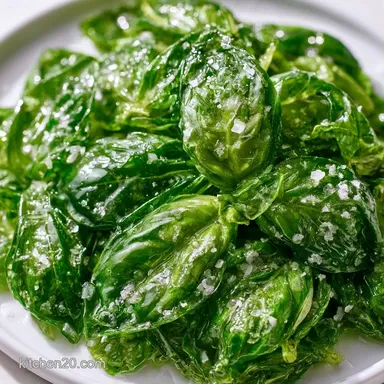
Ultra-Crispy Baked Basil Chips
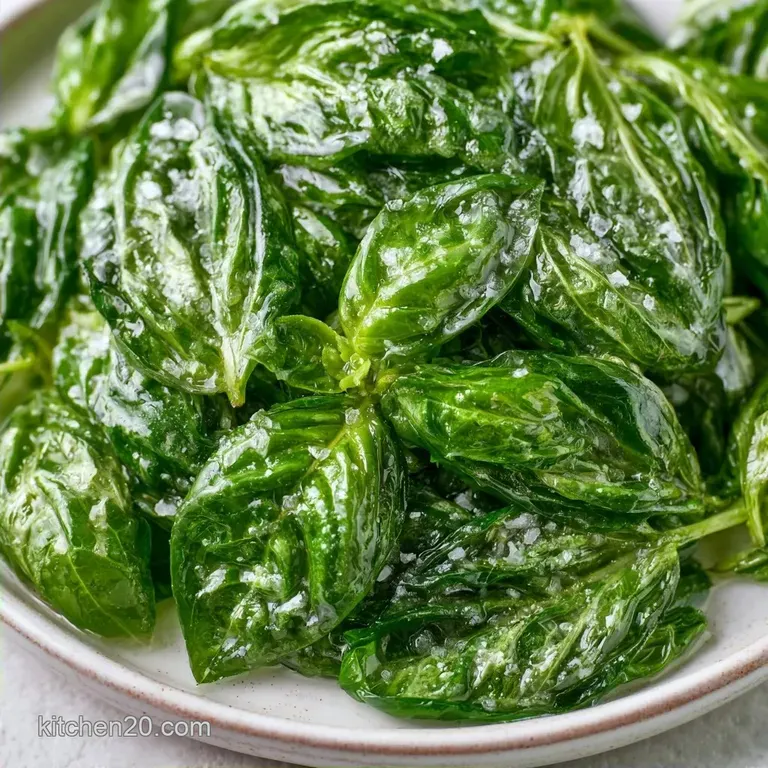
- Time: 10 min active + 20 min bake
- Flavor/Texture Hook: Brittle, salty, and aromatic
- Perfect for: Fancy appetizers or garnish
Crispy Baked Basil Chips
Basil has always been the backbone of Mediterranean cooking, usually hidden in a pesto or tucked into a Margherita pizza. In Thailand, it's the pungent heart of a stir fry. For a long time, we treated it as a garnish, something to toss on at the end. But treating the leaf as the main event changes everything.
This approach is about revolutionizing how we use herbs. Instead of a soft leaf, you get a crisp that shatters. It's a way to take a garden staple and turn it into a connected experience between a vegetable and a chip.
You can expect a snack that tastes like a concentrated version of a fresh garden. The Crispy Baked Basil Chips stay light, avoiding the greasiness of deep frying. They bring a professional touch to a home kitchen without needing any complex gear.
Why these snacks work
These Crispy Baked Basil Chips work because they balance temperature and hydration.
- Low Heat: 150°C dries the leaf slowly, which prevents the chlorophyll from breaking down and turning brown.
- Oil Barrier: A thin layer of olive oil conducts heat evenly and locks in the aromatic oils of the basil.
- Surface Area: The wide, thin shape of the leaf allows water to evaporate quickly, leading to that brittle snap.
| Method | Time | Texture | Best For |
|---|---|---|---|
| Oven | 20 min | Evenly crisp | Big batches |
| Stovetop | 5 min | Variable | Quick garnishes |
Quick recipe details
This recipe focuses on precision. To get the right results, follow these checkpoints: weigh out 50g of leaves, set your oven to 150°C, and check the leaves exactly at 12 minutes.
The process is straightforward, but the timing is what matters. If you pull them too early, they'll be chewy. If you leave them too long, they'll taste like burnt grass. It's all about that window of rigidity.
What makes them crisp
Each part of this recipe serves a purpose. Using the right oil and salt ensures the chips don't just dry out, but actually taste seasoned.
| Ingredient | What It Does | Best Swap |
|---|---|---|
| Fresh Basil | Provides the base flavor | Thai Basil (spicier) |
| Olive Oil | Conducts heat/prevents sticking | Avocado oil (neutral) |
| Sea Salt | Enhances flavor/draws moisture | Garlic salt (savory) |
Tools for the job
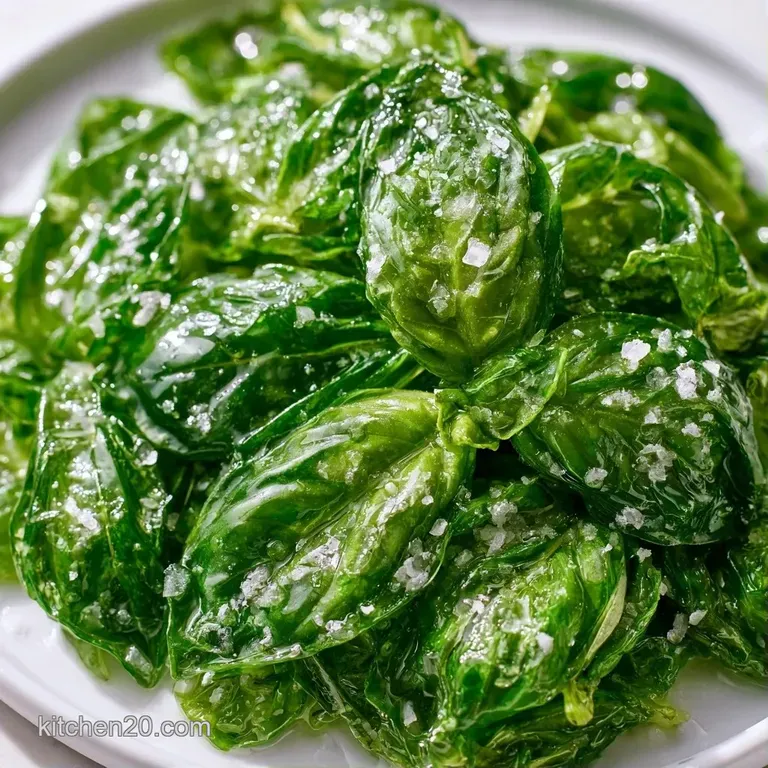
You don't need a fancy platform of gadgets for this. A standard rimmed baking sheet and parchment paper are the main requirements.
I recommend using a pastry brush. It lets you apply a thin, even coat of oil. If you just pour oil over the leaves, they'll clump together and steam rather than crisp. A salad spinner is also helpful to ensure the leaves are bone dry before they hit the oven.
Step by step guide
Follow these steps to get your Crispy Baked Basil Chips right on the first try.
The Dry Down
Wash the basil leaves in cold water. Use a salad spinner or paper towels to pat each leaf completely dry. Note: Water on the leaves creates steam, which ruins the crunch.
The Oil Barrier
Line a rimmed baking sheet with parchment paper. Arrange the leaves in a single layer without overlapping. Using a pastry brush, apply a very thin, even coat of olive oil to both sides of each leaf.
The Crisp
Sprinkle fine sea salt evenly across the tray. Place the tray in a preheated oven at 150°C. Bake for 15-20 minutes, checking at 12 minutes, until the leaves feel rigid to the touch.
Chef: For the best results, use a digital thermometer to verify your oven temp. Even a 10 degree difference can lead to burnt edges.
Fixes for common issues
Even with a simple recipe, things can go sideways. Most issues come down to moisture or heat.
Burnt chips
If your leaves are turning dark brown, your oven is likely running hot. According to Serious Eats, herbs are highly sensitive to overheating. Drop your temperature by 10°C and check them more frequently.
Chewy chips
This happens when water is still trapped in the leaf. Either you didn't dry them enough at the start, or they need another 2-3 minutes in the oven.
Sticking leaves
If the basil is gluing itself to the pan, you might be using too much oil or skipping the parchment. Always use a non stick surface.
| Problem | Cause | Fix |
|---|---|---|
| Brown/Burnt | Temp too high | Drop to 140°C |
| Chewy | Water left | Bake 2-3 mins more |
| Sticking | No parchment | Use silicon mat |
Different flavor twists
Once you have the base method down, you can use it as a platform for other flavors.
Thai Basil
Using Thai basil adds a licorice like note. These are great for topping a bowl of noodles or even Colombian Empanadas for a fusion twist.
Parmesan Boost
Dust the leaves with finely grated Parmesan before baking. The cheese melts into a salty crust that bonds with the basil.
Air Fryer
You can use an air fryer at 140°C for about 5-8 minutes. Be careful, as the air flow can blow the leaves around.
Microwave Fix
In a pinch, place leaves between two paper towels and microwave in 30 second bursts. It's faster but the texture is less uniform.
- If you want speed, use an air fryer.
- If you want maximum flavor, add parmesan.
- If you want a huge batch, use the oven.
Storage and waste tips
Store these in an airtight container at room temperature for up to 5 days. Do not put them in the fridge, as the humidity will make them soft. If you have a lot, you can freeze them in a vacuum sealed bag for a month.
For zero waste, take your basil stems and simmer them in a small pot of oil or butter. Strain the stems out, and you have a basil infused oil for your next meal.
Plating and serving ideas
Depending on the vibe of your dinner, you can present these Crispy Baked Basil Chips in three different ways.
For a casual snack, just pile them high in a small ceramic bowl. For a more polished look, scatter them randomly across a flat slate or dark plate to let the green pop. If you're going for a restaurant feel, place a single, perfectly crisp leaf atop a dish, like a bowl of Homemade Macaroni and Cheese.
| Level | Presentation | Tweak |
|---|---|---|
| Simple | Small bowl | Pile high |
| Polished | Flat slate | Scatter randomly |
| Restaurant | atop pasta | Single leaf placement |
This snack is a simple way to bring high end texture to your table. Just remember the 150°C limit, and you'll have a brittle, fragrant chip that changes how you think about herbs.
Recipe FAQs
What can be made with tons of fresh basil?
Baked basil chips are a great option. They reduce the volume of fresh leaves into a concentrated, crunchy snack that lasts longer than raw leaves.
How to store these basil chips to keep them crispy?
Place them in an airtight container at room temperature. They will stay crisp for up to 5 days, but you must avoid the fridge as the humidity will make them soft.
What can be used as an alternative for fresh basil?
Fresh spinach or kale are the best substitutes. While the flavor differs, they provide a similar leaf structure for baking. If you enjoy layering flavors in a lasagna recipe, you'll find these greens work well as a base.
Is it true that basil chips should be stored in the fridge to stay fresh?
No, this is a common misconception. The moisture in the refrigerator will quickly soften the chips; store them in a dry, airtight container instead.
How to keep the leaves from burning in the oven?
Bake at 300°F (150°C) and check them at 12 minutes. Removing them as soon as they feel rigid to the touch prevents them from turning bitter or charred.
What are some good dishes that incorporate basil chips?
Use them as a garnish for pasta, soups, or salads. They add a concentrated burst of herbal flavor and a necessary crunch to softer dishes.
What is the most flavorful basil for making chips?
Genovese basil is the gold standard. Its balanced, sweet peppery profile holds up best during the baking process.
Crispy Baked Basil Chips