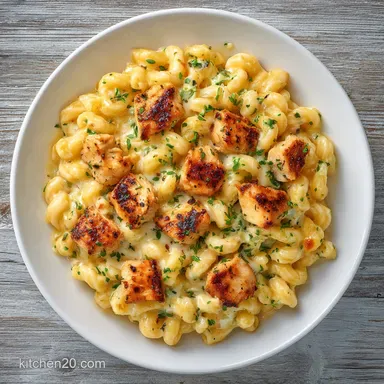
One Pot Cheesy Chicken Pasta: Creamy and Savory
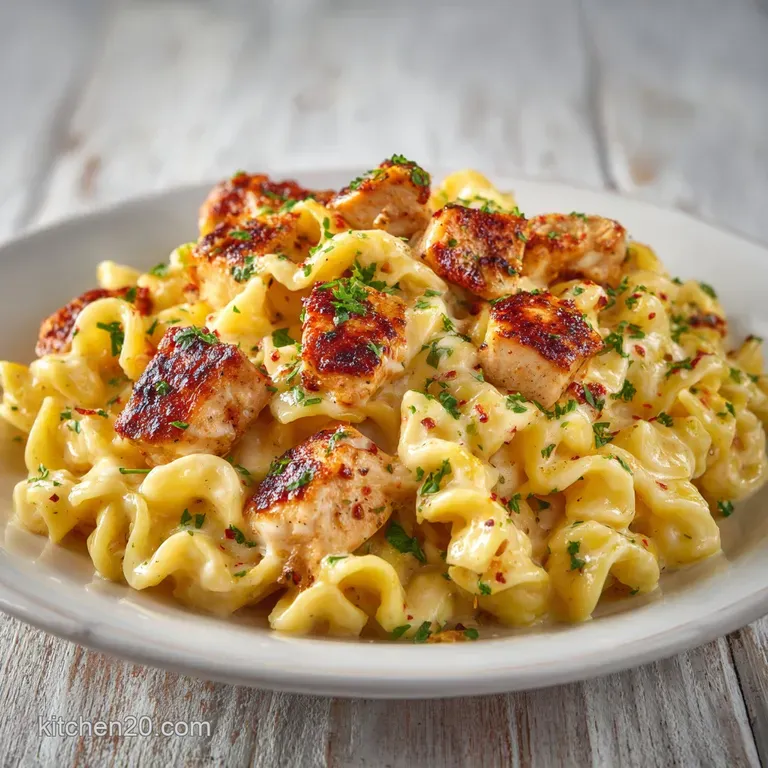
- Time: 10 min active + 20 min cooking = Total 30 mins
- Flavor/Texture Hook: Velvety cheese sauce with golden, sizzled chicken
- Perfect for: Busy weeknight dinners and minimal cleanup meal prep
The smell of garlic hitting hot olive oil is, for me, the ultimate signal that dinner is actually happening. It's that specific, fragrant aroma that fills the kitchen and immediately makes everyone in the house stop what they're doing and wander into the room.
I remember my grandmother doing something similar with her "everything in one pot" meals, which were the backbone of mid century American home cooking. Those meals weren't about fancy techniques, but about the efficiency of feeding a family without spending four hours scrubbing pans.
That cultural tradition of simplicity is exactly what this dish is about. It's not trying to be a five star restaurant meal, but a cozy, comforting hug in a bowl. We're taking the concept of the classic macaroni and cheese and adding protein and a bit of depth with smoked paprika to make it a full meal.
You can expect a result that is rich, creamy, and satisfying. By using a few smart shortcuts and a single deep skillet, we get the depth of a slow cooked sauce in about 30 minutes. This one pot cheesy chicken pasta is designed for those of us who love the result but hate the cleanup.
The Best One Pot Cheesy Chicken Pasta
To get this right, you have to embrace the "one pot" philosophy fully. Most people make the mistake of boiling pasta separately and then adding it to a sauce, but that throws away the most valuable ingredient: the pasta starch.
When you cook the pasta in the broth and cream, that starch releases and bonds with the fats from the cheese, creating a texture that is velvety rather than greasy.
Right then, let's talk about the chicken. The key is a hard sear. You want those edges to be golden and slightly crisp before you introduce any liquid. If you just simmer the chicken from the start, it ends up with a rubbery, boiled texture.
We want a sizzle that creates a fond - those little brown bits on the bottom of the pan - because that's where the real flavor lives.
Trust me on this, don't skip the cream cheese. While cheddar provides the sharp, classic taste, the cream cheese acts as a stabilizer. It prevents the sauce from breaking or becoming oily when you hit it with the heat. It's the secret to that professional, glossy finish that clings to every curve of the pasta.
Why The Sauce Thickens
- Starch Release: Cooking pasta in the sauce allows amylose and amylopectin to leach out, thickening the liquid naturally without needing a flour roux.
- Fat Binding: The heavy cream and butter fat in the cheeses create a stable emulsion, keeping the sauce smooth.
- Reduction Logic: Simmering the broth and cream reduces the water content, concentrating the flavor and intensifying the creaminess.
- Cheese Fusion: Using a mix of hard (Parmesan) and soft (cream cheese) ensures the sauce stays fluid but thick.
| Method | Time | Texture | Best For |
|---|---|---|---|
| Stovetop | 30 mins | Velvety & Glossy | Weeknight efficiency |
| Oven Baked | 50 mins | Crusty & Dense | Sunday family dinners |
Proper Tool Selection
For this recipe, I highly recommend a 12 inch deep skillet or a Dutch oven. You need the high sides to prevent the pasta liquid from bubbling over, and a heavy bottom to ensure the chicken sears evenly without hot spots.
I usually use a cast iron skillet or a stainless steel pan because they hold heat much better than non stick, which helps in getting that golden crust on the chicken.
If you're looking to streamline your kitchen, a Dutch oven is the gold standard here. It transitions perfectly from the stove to the table, and the tight fitting lid is crucial for the simmering phase. It traps the steam, ensuring the pasta cooks evenly without the liquid evaporating too quickly.
Let's be honest, don't bother with a shallow frying pan. You'll end up stirring the pasta into a shallow pool of liquid, and it'll either overcook or stay raw in the middle because there's not enough depth for the heat to circulate. Stick to the deep pans.
Ingredient Breakdown
| Ingredient | Science Role | Pro Secret |
|---|---|---|
| Short Pasta | Starch Provider | Use rotini or penne for maximum sauce cling |
| Cream Cheese | Stabilizer | Cubing it first ensures it melts in seconds |
| Smoked Paprika | Flavor Depth | Adds a "grilled" note without using an actual grill |
| Sharp Cheddar | Primary Flavor | Grate it yourself to avoid anti caking starches |
For the Protein & Base
- 1 lb boneless skinless chicken breast, cubed into 1 inch pieces Why this? Lean protein that cooks quickly and evenly
- 2 tbsp olive oil Why this? High smoke point for searing
- 3 cloves garlic, minced Why this? Adds essential aromatic depth
- 1 tsp smoked paprika Why this? Provides a subtle, wood fired flavor
- 1/2 tsp salt Why this? Basic flavor enhancer
- 1/4 tsp cracked black pepper Why this? Adds a slight floral heat
For the Sauce & Pasta
- 8 oz short pasta (penne, rotini, or bow tie) Why this? Holds heavy sauces better than long pasta
- 3 cups low sodium chicken broth Why this? Provides a savory base for the pasta to absorb
- 1 cup heavy cream Why this? Adds richness and fat for the emulsion
For the Cheesy Finish
- 2 oz cream cheese, softened and cubed Why this? Prevents the cheese sauce from splitting
- 1 1/2 cups sharp cheddar cheese, freshly shredded Why this? Strong flavor that cuts through the cream
- 1/2 cup grated Parmesan cheese Why this? Adds a salty, umami kick
- 1 tbsp fresh parsley, chopped Why this? Brightens the heavy flavors
| Original Ingredient | Substitute | Why It Works |
|---|---|---|
| Heavy Cream (1 cup) | Whole Milk + 1 tbsp Butter | Similar fat content. Note: Sauce will be slightly thinner |
| Sharp Cheddar | Gruyère or Fontina | Similar melting properties. Note: Offers a nuttier, milder flavor |
| Chicken Broth | Vegetable Broth | Same liquid ratio. Note: Lacks the deep meatiness of chicken broth |
| Penne Pasta | Fusilli or Rigatoni | Similar starch release. Note: Changes the "mouthfeel" of the dish |
Cooking Steps
- Heat the olive oil in a 12 inch deep skillet or Dutch oven over medium high heat. Season the cubed chicken with paprika, salt, and pepper. Add the chicken to the pan and cook 5-7 mins until the edges are golden brown. Note: Don't crowd the pan or the chicken will steam instead of sear.
- Stir in the minced garlic during the last 60 seconds of browning until it smells fragrant. Note: Garlic burns quickly, so only add it at the very end.
- Pour in the chicken broth and heavy cream, scraping the bottom of the pan with a wooden spoon to release the browned bits. Note: This "deglazing" step adds all the deep flavor back into the sauce.
- Stir in the dry pasta. Bring the liquid to a gentle boil, then reduce heat to a simmer.
- Cover the pan and cook for 10-12 minutes, stirring occasionally, until the pasta is tender and the liquid has reduced by half. Note: Stirring prevents the pasta from sticking to the bottom.
- Turn the heat to low. Stir in the cubed cream cheese until fully melted and smooth. Note: Low heat is key here to prevent the cheese from graining.
- Fold in the shredded cheddar and Parmesan, stirring gently until the sauce reaches a velvety sheen.
- Remove from heat immediately. Note: If you keep cooking, the cheese will separate and become oily.
- Garnish with chopped fresh parsley before serving.
Fixing Common Pasta Problems
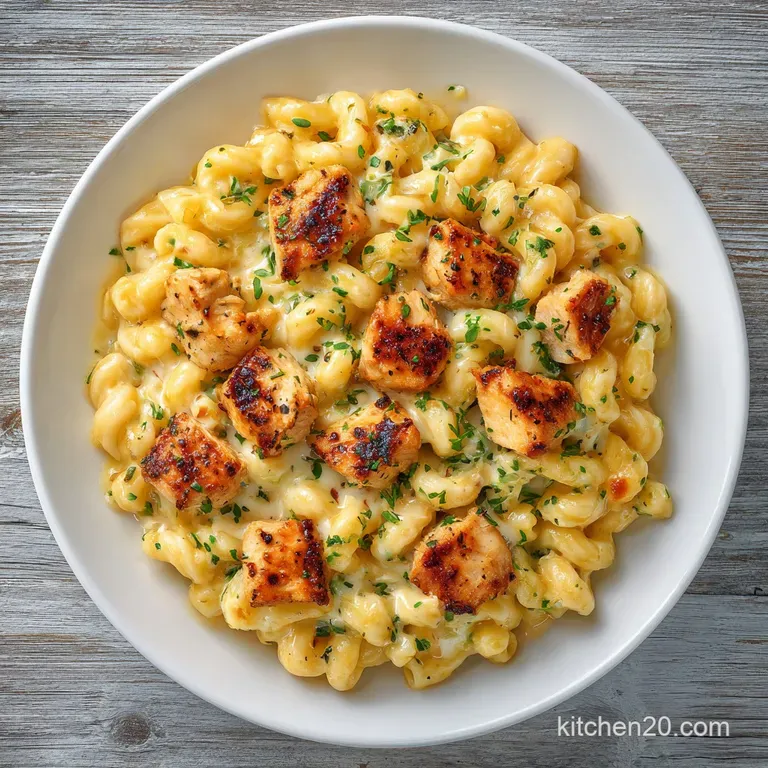
When you're making a pot cheesy chicken pasta with a single pan, things can occasionally go sideways. Most of the time, it's a heat management issue. If the sauce looks like it's separating, it's usually because the temperature was too high when the cheese went in.
Troubleshooting Common Issues
| Issue | Solution |
|---|---|
| Why Your Sauce Is Too Thick | This usually happens if the liquid evaporates too quickly during the simmering phase. According to the guides at Serious Eats, the ratio of liquid to starch is critical |
| Why The Cheese Is Clumping | Clumping happens when pre shredded cheese is used. Those bags are coated in potato starch or cellulose to prevent sticking, which stops them from melting smoothly. Always grate your own cheese for thi |
| Why The Pasta Is Overcooked | If the pasta is mushy, you likely simmered it too long or used a pasta shape that is too thin for the cook time. Stick to the 10-12 minute window and start tasting the pasta at 9 minutes. |
Common Mistakes Checklist
- ✓ Using pre shredded cheese instead of grating your own.
- ✓ Adding garlic too early, causing it to burn and turn bitter.
- ✓ Boiling the pasta aggressively, which can break the noodles.
- ✓ Forgetting to scrape the browned bits (fond) from the bottom of the pan.
- ✓ Leaving the pan on the burner after the cheese has melted.
Adjusting The Serving Size
If you're cooking for just two people, cut the ingredients in half. Use a smaller 8 inch skillet if you have one, as a 12 inch pan will cause the liquid to evaporate too quickly due to the larger surface area. Reduce the simmering time by about 20%, but always trust your taste test over the timer.
When scaling up for a crowd (say, 8 servings), don't just double everything blindly. I've found that doubling the salt and spices often over powers the dish. Increase the spices to 1.5x instead of 2x.
Also, reduce the total liquid by about 10%, as larger volumes of liquid take longer to reduce and can result in overcooked pasta.
If you're making a massive batch, I recommend working in two separate pans. Trying to stir 2 lbs of pasta and chicken in one pot often leads to uneven cooking, where the bottom is mush and the top is raw.
Truths About Pasta Cooking
Many people believe that searing meat "seals in the juices." This is a myth. Searing actually causes moisture loss, but we do it because the browning creates complex flavors that you can't get any other way. In this chicken pasta, the sear is about taste, not moisture.
Another common misconception is that you should rinse pasta after cooking. Never do this, especially in a one pot recipe. Rinsing removes the starch that we need to make the sauce cling to the noodles. If you rinse it, your sauce will just slide off the pasta and pool at the bottom of the bowl.
Some folks think you need a "roux" (butter and flour) to make a creamy sauce. While that's traditional, it's not necessary here. The combination of heavy cream, cream cheese, and the natural starch from the pasta creates a stable, creamy texture without the extra step.
Storage and Leftovers
Store this dish in an airtight container in the fridge for up to 4 days. Because it's so creamy, it will thicken significantly as it cools. This is normal.
When reheating, don't just throw it in the microwave on high. That will cause the fats to separate, leaving you with a puddle of oil and clumps of cheese. Instead, add a splash of milk or water to the leftovers and heat them on the stove over low heat, stirring constantly.
This re emulsifies the sauce and brings back that velvety texture.
For freezing, I don't recommend freezing the finished dish. The cream and cheese can break down, resulting in a grainy texture. However, you can freeze the seared chicken and the base sauce (before adding the cheese) for up to 3 months. Just thaw and add the cheese fresh when you're ready to eat.
To keep things zero waste, save your chicken breast trim and any onion or carrot scraps in a freezer bag. Once the bag is full, simmer them in water for a few hours to make your own homemade chicken broth for the next time you make this recipe.
Serving Suggestions
This pot cheesy chicken pasta is a heavy hitter, so it pairs best with something bright and acidic to cut through the richness. A simple arugula salad with a lemon vinaigrette is a great choice. If you want something a bit more substantial, you can try some Avocado Pasta Sauce as a side for a creamy on-creamy feast, though that's definitely for the bold.
For those who love a bit of heat, I highly recommend stirring in a tablespoon of Bayou Bomb garlic butter right before serving. It adds a spicy, garlic forward kick that transforms the dish into something entirely different.
If you're serving this for a dinner party, garnish with a sprinkle of fresh chives or a pinch of red pepper flakes. Serve it in warmed bowls to keep the cheese sauce from thickening too quickly while you're eating. It's a simple meal, but the presentation makes it feel like you spent all day in the kitchen.
Recipe FAQs
How to make this one pot chicken pasta?
Brown the chicken first in a skillet, then stir in broth, cream, and dry pasta. Simmer the mixture covered for 10-12 minutes before stirring in the cheeses on low heat.
Can I swap the cheese for a different creamy base?
Yes, you can use a pre-made white sauce. If you prefer a more traditional flavor, our homemade Alfredo sauce works beautifully as a base for this chicken and pasta combination.
Why is the cheese clumping instead of melting smoothly?
Avoid using pre-shredded cheese. Bagged cheeses are coated in potato starch or cellulose to prevent sticking, which prevents them from melting into a velvety sauce.
How should I store and reheat the leftovers?
Store in an airtight container for up to 4 days. Reheat on the stove over low heat with a splash of water or milk to re-emulsify the fats and restore the creamy texture.
Why is my sauce too thick after cooking?
The liquid likely evaporated too quickly during the simmering phase. Ensure the pan remains covered and do not simmer longer than the recommended 12 minutes.
Is it true that I must boil the pasta separately to avoid mushiness?
No, this is a common misconception. Cooking the pasta directly in the broth and cream creates a starchier sauce that clings better to the noodles.
How long should I cook the pasta in the liquid?
Simmer for 10 to 12 minutes. Stir occasionally and remove from heat once the pasta is tender and the liquid has reduced by half.
One Pot Cheesy Chicken Pasta