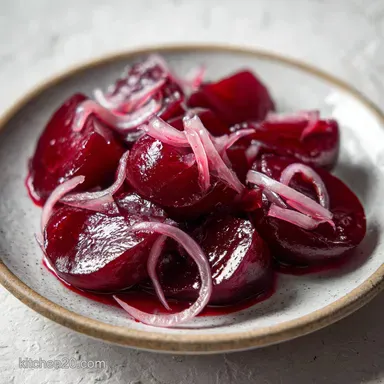
Pickled Beets: Old Fashioned Refrigerator Style
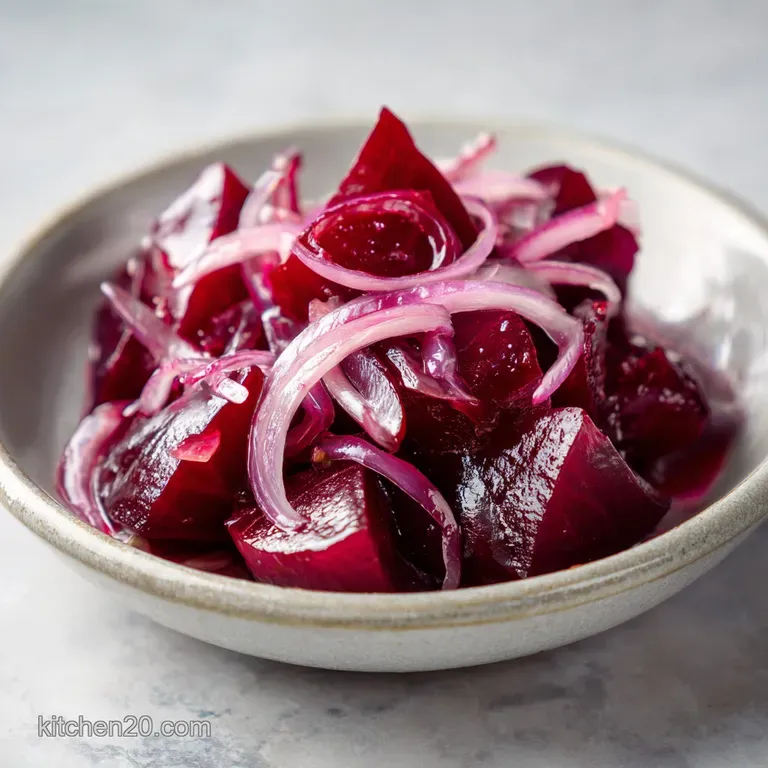
- Time:15 minutes active + 24 hours chilling = Total 25 hours
- Flavor/Texture Hook: Tangy, velvety beets with a satisfying onion shatter
- Perfect for: Meal prep, holiday platters, or a budget-friendly side dish
- The Best Easy Pickled Beets
- Common Recipe Failures
- Essential Recipe Specs
- The Core Components
- Necessary Kitchen Tools
- The Step-by-Step Method
- Preventing Common Mistakes
- Troubleshooting Common Issues
- Customizing Your Flavor
- Freshness and Storage
- Serving and Pairings
- Very High in Sodium
- Recipe FAQs
- 📝 Recipe Card
That deep, earthy aroma of boiling beets always takes me back to my first real attempt at preserving. I remember the absolute chaos of my kitchen, with magenta splatters on the white tiles and my hands stained a vivid purple for three days.
I had tried a recipe that was way too heavy on the vinegar, and the result was so sharp it practically burned my throat. It was a total mess, but it taught me that the secret isn't just about the acid, it's about the balance.
The real hero here is the beet itself. Beets have this natural, sugary depth that most vegetables lack, but if you don't treat them right, they can taste like actual dirt. To fix that, we use a specific ratio of apple cider vinegar and sugar.
This transforms the root from something "earthy" into something vibrant and zesty. Trust me, once you get this balance right, you'll never go back to store-bought jars.
We're aiming for a texture that is velvety but still holds its shape, paired with red onions that keep a bit of a crunch. This recipe is all about streamlining the process so you spend less time scrubbing pots and more time enjoying the results. Let's crack on.
The Best Easy Pickled Beets
When people talk about making Pickled Beets, they often overcomplicate the process with weird spices or expensive equipment. Honestly, you don't need a fancy canning setup for these.
We're making refrigerator style pickles, which means we skip the dangerous boiling water bath and let the cold of the fridge do the heavy lifting. It's faster, safer, and keeps the colors much more vivid.
The goal is a bright, translucent slice of beet that tastes fresh. Most store-bought versions are mushy and overly sweet, masking the natural flavor of the vegetable. By controlling the simmer time and using an ice bath, we ensure the beet stays firm.
It's a budget smart approach that uses basic pantry staples to create a high end side dish.
I've found that using apple cider vinegar instead of white distilled vinegar adds a subtle fruitiness that complements the beet's sweetness. It's a small tweak, but it makes a massive difference in the final profile.
If you're looking for a way to use up a big haul of root vegetables, this is the most efficient system I've found.
Common Recipe Failures
Most people struggle with two things: texture and taste. Either the beets come out like baby food, or they taste like a bottle of vinegar. The mushiness usually happens because the beets are boiled for too long, or they aren't cooled down fast enough.
When the vegetable stays hot for too long, it continues to cook in its own heat, breaking down the cell walls until it's just a pulp.
Then there's the "flat" flavor problem. A lot of recipes forget that salt is just as important as acid. Salt doesn't just make things salty; it acts as a carrier for the other flavors, helping the vinegar and sugar penetrate deep into the center of the beet.
Without enough salt, you end up with a beet that tastes raw in the middle and sour on the outside.
Another mistake I once made was adding the brine while it was boiling. While you want the brine hot, pouring it in at a rolling boil can actually "cook" the red onions, turning them from a crisp, shattering texture into something limp and gray. You want a simmer, not a storm.
Essential Recipe Specs
To get these Pickled Beets exactly right, you need to hit a few specific markers. These aren't just suggestions, they're the guardrails that keep the recipe from falling apart.
Precision Checkpoints:
- The Knife Test: A knife should slide into the beet with zero resistance, but the beet shouldn't be falling apart in the pot.
- The Cooling Gap: Jars must sit at room temperature for exactly 1 hour before hitting the fridge to avoid thermal shock.
- The Steep Time: 24 hours is the minimum. Any sooner and the center of the beet will still taste like a raw root.
The budget angle here is great because beets are incredibly cheap per pound. By making them at home, you're avoiding the markup of "gourmet" pickled goods while getting a far superior product.
| Method | Prep Time | Texture | Best For |
|---|---|---|---|
| Fresh Boil | 15 mins | Velvety | Long-term fridge storage |
| Pre cooked | 5 mins | Softer | Quick appetizers |
| Slow Cook | 40 mins | Very Soft | Salads/Mashing |
The Core Components
Understanding what each ingredient does helps you make smart swaps if you're missing something in the pantry. According to USDA FoodData, beets are rich in folate and manganese, and the pickling process helps preserve these while adding probiotic potential if fermented (though these are vinegar pickled).
Ingredient Deep Dive
| Ingredient | Science Role | Pro Secret |
|---|---|---|
| Apple Cider Vinegar | Acidifier | Provides a fruitier, softer tang than white vinegar |
| Granulated Sugar | Balance | Cuts the sharpness; stabilizes the ruby color |
| Kosher Salt | Osmosis | Draws out moisture to let the brine enter the beet |
| Cinnamon Stick | Aroma | Adds a warm, woody note that hides "dirt" flavors |
The Root Vegetables
The red beets provide the bulk and the color. I prefer medium sized beets because they cook evenly. If you use giant ones, the outside gets mushy before the inside is done. The red onion is there for contrast, adding a sharp, sulfurous bite that balances the sweetness.
The Pickling Brine
The liquid is a simple solution of water, vinegar, and sugar. The ratio is key. Too much water and they won't keep; too much vinegar and they're inedible. The black peppercorns and cloves add a depth of flavor that makes people ask, "What is in this?" without being able to pinpoint it.
Necessary Kitchen Tools
You don't need a professional lab, but a few specific tools make this way more efficient. I use a large stockpot for the beets and a small saucepan for the brine. If you have a handheld immersion blender, it's great for mixing the sugar and salt into the water, though a whisk works just fine.
The most important piece of gear is the glass jar. I always use Mason jars with tight fitting lids. Plastic containers can absorb the vinegar smell and, worse, they can get stained a permanent, neon pink. Trust me, you don't want your Tupperware looking like a crime scene.
I also recommend an ice bath. A large bowl filled with cold water and ice cubes is essential for stopping the cooking process. This is what keeps the Pickled Beets from becoming mushy.
The step-by-step Method
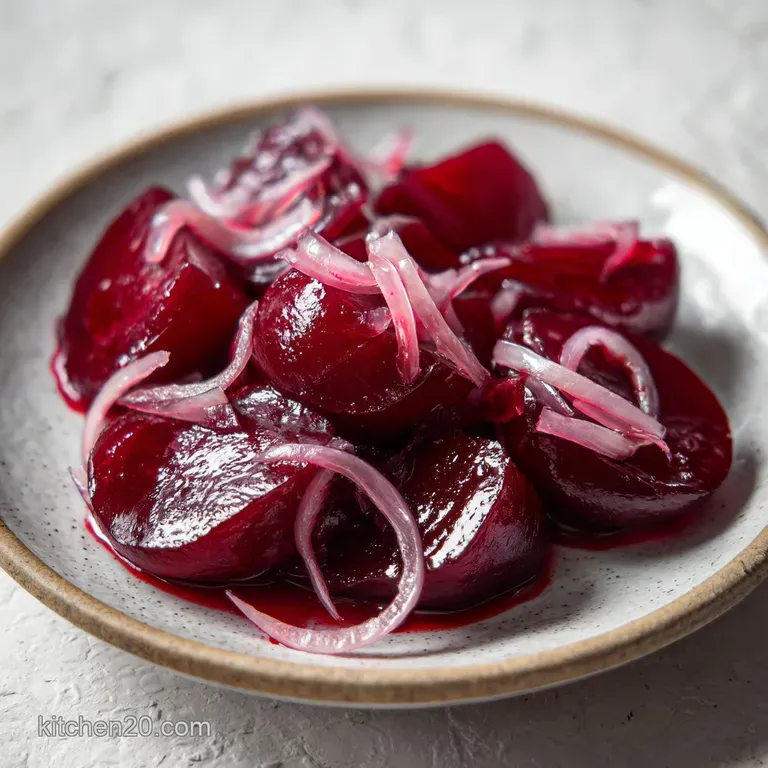
Let's get into it. Follow these steps exactly to ensure the texture is spot on.
- Boil the beets. Place scrubbed, whole beets in a pot of water. Bring to a boil and cook for 30-45 minutes until a knife slides easily into the center. Note: Keep the skins on to preserve color.
- Shock the beets. Immediately plunge the hot beets into an ice bath. Wait 5 minutes until they feel cold to the touch. Note: This makes the skins slip right off.
- Prep the vegetables. Peel the skins using a paper towel for grip. Slice them into 1/4 inch rounds. Place them in jars with the sliced red onions.
- Combine brine ingredients. Mix apple cider vinegar, water, sugar, salt, peppercorns, cinnamon, and cloves in a saucepan.
- Simmer the brine. Heat over medium heat until the sugar and salt have completely dissolved and the liquid is steaming. Note: Do not let it reach a violent boil.
- Pour the brine. Carefully pour the hot liquid over the beets and onions. Ensure everything is fully submerged.
- Press and seal. Use a spoon to press the beets down so no air pockets remain. Seal the lids tightly.
- Room temperature cool. Let the jars sit on the counter for 1 hour until the glass is no longer hot.
- The final chill. Move the jars to the refrigerator. Wait at least 24 hours before opening them.
Chef's Tip: If you want a more intense flavor, freeze your cinnamon stick for 10 minutes before adding it to the brine. It sounds crazy, but it helps the essential oils release more slowly during the simmer.
Preventing Common Mistakes
Even with a simple recipe, things can go sideways. Most issues with Pickled Beets come down to temperature control or ratio errors. If your brine looks cloudy, it's usually because the salt didn't dissolve fully or you used a vinegar with too many sediments.
Troubleshooting Common Issues
| Issue | Solution |
|---|---|
| Why Your Beets Are Mushy | This is the most common complaint. It happens when the beets are overcooked in the pot or not shocked in the ice bath. The internal heat continues to break down the pectin, leading to a soft, mealy te |
| Why the Flavor Is Flat | If the Pickled Beets taste bland, you likely under salted. Salt is the engine that drives the flavor into the vegetable. Another cause could be using a low quality vinegar with too much added water. |
| Why the Brine Is Cloudy | Cloudiness usually comes from impurities in the water or undissolved sugar. Ensure you simmer the brine long enough to fully incorporate the solids. |
Common Mistakes Checklist:
- ✓ Did you use an ice bath?
- ✓ Is the brine completely submerged?
- ✓ Did you wait the full 24 hours to chill?
- ✓ Did you peel the beets while they were still warm?
- ✓ Did you use whole peppercorns instead of ground?
Customizing Your Flavor
Once you have the basic method down, you can start playing with the profile. If you're feeling adventurous, try swapping the red beets for golden beets. They have a milder, more honey like flavor and won't stain your entire kitchen.
For those who want a "no sugar" version, you can use a touch of stevia or just omit the sugar entirely. Note that the result will be much more aggressive and acidic, so you might want to increase the water by 1/4 cup to mellow it out.
If you want a spicy kick, throw in a sliced jalapeño or a pinch of red pepper flakes.
If you have leftover beets and want something different, you could try making a Hearty Tangy Classic Borscht which uses a similar flavor base but in a comforting soup format.
Decision Shortcut:
- Want it sweeter? Replace sugar with 2 tbsp honey.
- Want it tangier? Replace the 1/2 cup water with more vinegar.
- Want more crunch? Slice the onions paper thin and add them only during the cooling phase.
Freshness and Storage
Because these are refrigerator Pickled Beets, they aren't shelf stable. The vinegar acts as a preservative, but they still need the cold. Keep them in the fridge for up to 3 weeks. After that, the texture will start to soften, though they'll still be safe to eat.
I don't recommend freezing these. Freezing breaks the cellular structure of the beet and the onion, meaning they'll turn into a mushy mess once thawed. Stick to the fridge.
Zero Waste Tip: Don't throw away the beet greens! They are edible and taste like a cross between spinach and chard. Sauté them with a bit of garlic and olive oil for a quick side dish. It's an easy way to get more nutrients out of a single bunch of vegetables.
Serving and Pairings
The beauty of Pickled Beets is their versatility. They provide a sharp, acidic contrast to fatty foods. I love serving them on a piece of toasted sourdough with a thick smear of goat cheese or ricotta. The creaminess of the cheese cuts through the tang of the beets perfectly.
You can also toss them into a spinach salad with walnuts and feta. The ruby red juice acts as a natural dressing base. For a more elaborate spread, pair them with some Roasted Red Peppers and a few olives for a colorful, budget-friendly antipasto platter.
Right then, you've got everything you need. These Pickled Beets are a fantastic way to bring some brightness to your meal prep. Just remember: don't skip the ice bath, be patient with the chill time, and keep a towel handy for those purple splatters. Trust me, the taste is worth the mess.
Very High in Sodium
1158 mg 1,158 mg of sodium per serving (50% 50% of daily value)
The American Heart Association recommends a daily limit of no more than 2,300 mg of sodium to lower blood pressure and reduce the risk of heart disease.
Tips to Reduce Sodium
-
Cut the Salt-30%
The kosher salt is the primary sodium source. Reduce the amount by half or more to significantly lower the sodium content.
-
Use a Salt Substitute-30%
Replace the kosher salt with a potassium-based salt substitute to maintain a savory profile without the sodium.
-
Increase Acidity-15%
Add a small amount of extra apple cider vinegar; the acidity can mimic the 'brightness' of salt on the palate.
-
Enhance Aromatics
Increase the amount of whole black peppercorns, cinnamon, or cloves to provide deeper flavor complexity without adding sodium.
Recipe FAQs
How long will refrigerated pickled beets last?
Up to 3 weeks. Store them in airtight jars in the refrigerator to maintain their crisp texture and flavor.
Are pickled beets good for diabetics?
Yes, in moderation. While beets are nutrient-dense, the granulated sugar used in the brine can impact blood glucose levels.
How to make refrigerator beet pickles?
Boil scrubbed beets for 30-45 minutes until a knife slides in easily. Shock them in an ice bath, slice them, and submerge in a simmered brine of apple cider vinegar, water, sugar, salt, and spices.
What is the best vinegar to use for pickled beets?
Apple cider vinegar. Its mild, fruity acidity balances the natural earthiness of red beets more effectively than distilled white vinegar.
Why are my pickled beets mushy?
You likely overcooked the beets or skipped the ice bath. Without a rapid temperature drop, internal heat continues to break down the pectin, resulting in a mealy texture.
Is it true that I must use distilled vinegar to prevent the brine from becoming cloudy?
No, this is a common misconception. Apple cider vinegar works perfectly here, and cloudiness is typically caused by impurities rather than the type of vinegar used.
How can I prevent the flavor from tasting flat?
Ensure you use the full amount of kosher salt. Salt is the engine that drives the brine's flavor into the vegetables. If you enjoyed balancing these bold flavors, apply the same acidity principles to our tangy kidney bean salad.
Pickled Beets with Red Onion