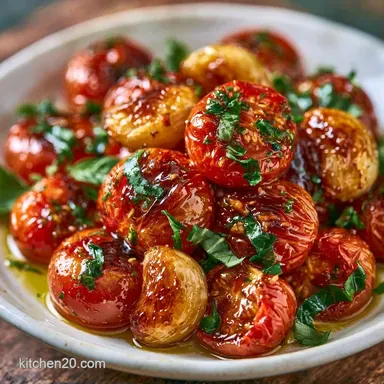
Jammy Roasted Tomatoes Olive Oil
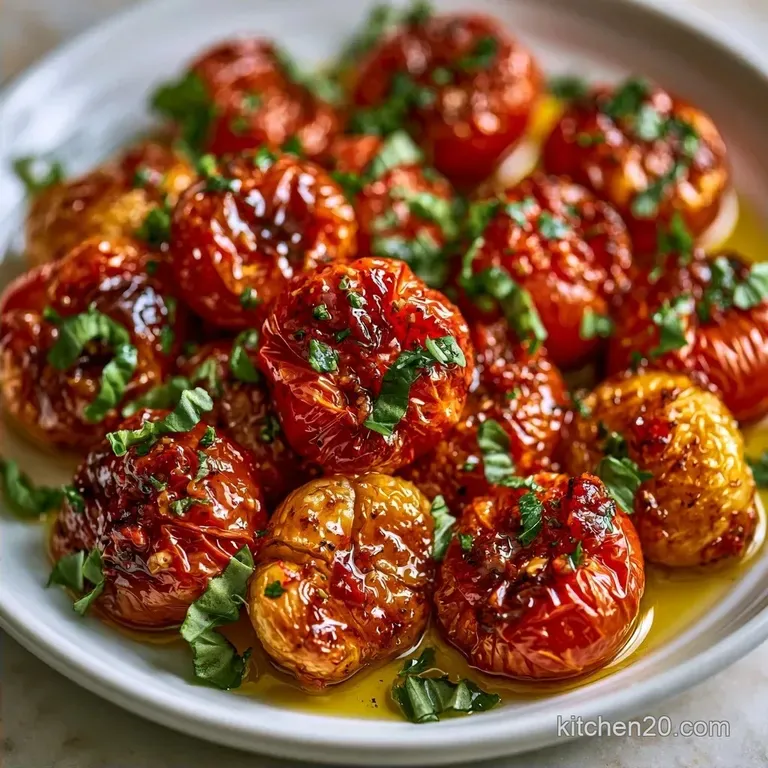
- Time: 10 min active + 50 min roasting
- Flavor/Texture Hook: Jammy, concentrated sweetness with mellow garlic
- Perfect for: Sophisticated appetizers, meal prep, or a quick pasta upgrade
I remember the first time I tried roasting tomatoes at a high temperature. I thought a quick blast of heat would give me those charred, blackened edges I see in restaurants. Instead, I got shriveled skins and a watery mess on my baking sheet.
It felt like a waste of good produce until I realized that the real trick is patience and a lower oven setting.
The cherry tomato is the hero here. I chose these because their skin to flesh ratio is just right, allowing them to hold their shape while the insides turn into a thick syrup. Using larger tomatoes usually results in too much water, which dilutes the flavor of the oil.
When you get the temperature right, the kitchen fills with a scent that reminds me of an Italian summer. This Roasted Tomatoes Olive Oil recipe transforms humble ingredients into something that feels like a luxury, providing a connected way to bring restaurant quality flavors into a home kitchen.
Roasted Tomatoes Olive Oil Specs
| Goal | What to change |
|---|---|
| Sweeter taste | Roast 10 mins longer |
| Spicy kick | Add red pepper flakes |
| Nuttier aroma | Use walnut oil |
These tomatoes are a revolutionizing addition to any pantry. They provide a depth of flavor that fresh tomatoes simply cannot match because the slow roast removes the excess water.
Low Heat Texture Tricks
Slow Evaporation: Lower temperatures draw out moisture without scorching the skins, which concentrates the natural fructose. Gentle Infusion: The oil warms slowly, allowing the garlic to soften and flavor the fat without turning bitter.
This approach is similar to the one I use for my [depthcharge tomato sauce](https://kitchen20.com/recipes/the-sunday slowroast-depthcharge tomato-sauce/), where slow roasting is the only way to get that heavy, savory base.
| Fresh Cherry Tomatoes | Canned Diced Tomatoes |
|---|---|
| High burst, bright acidity | Softer, more uniform texture |
| Holds shape during roast | Disintegrates into a mush |
| Fresh, grassy finish | More "cooked" and metallic |
The Fresh Essentials
For this dish, the quality of the oil matters. Since it's a primary component, a decent extra virgin olive oil makes a noticeable difference in the final taste.
- 2 pints (600g) cherry or grape tomatoes Why this? High sugar content and hold their shape
- ½ cup (120ml) extra virgin olive oil Why this? Provides a fruity, peppery base
- 6 cloves (18g) garlic, peeled and smashed Why this? Smashed cloves infuse better than minced
- 1 tsp (6g) kosher salt Why this? Draws out moisture and enhances sweetness
- ½ tsp (1g) freshly cracked black pepper Why this? Adds a subtle heat to balance the sugar
- 2 tbsp (8g) fresh basil or thyme, torn Why this? Fresh herbs provide a bright contrast
| Original Ingredient | Substitute | Why It Works |
|---|---|---|
| EV Olive Oil | Avocado Oil | High smoke point. Note: Lacks the fruity flavor of olive oil |
| Cherry Tomatoes | Grape Tomatoes | Very similar profile. Note: Slightly firmer skin |
| Fresh Basil | Dried Oregano | Classic Italian flavor. Note: Add during roasting, not after |
Needed Kitchen Tools
You don't need a professional setup for this, but a few specific tools make it cleaner. A large mixing bowl is essential for tossing the tomatoes without smashing them.
I always use a parchment lined baking sheet. It prevents the tomatoes from sticking and makes cleanup a breeze. If you don't have parchment, a silicone mat works well, though a greased pan is a last resort.
The Roasting Process
Prepping the Produce
Preheat your oven to 300°F (150°C). Wash the cherry tomatoes and slice them in half horizontally. This opening allows the juices to mingle with the oil instead of steaming inside the skin.
Coating for Maximum Flavor
In a large mixing bowl, combine the halved tomatoes and smashed garlic cloves. Drizzle with the olive oil and toss gently until every surface is glistening. Sprinkle in the salt and pepper, ensuring an even coating to draw out the natural sugars.
Mastering the Slow Roast
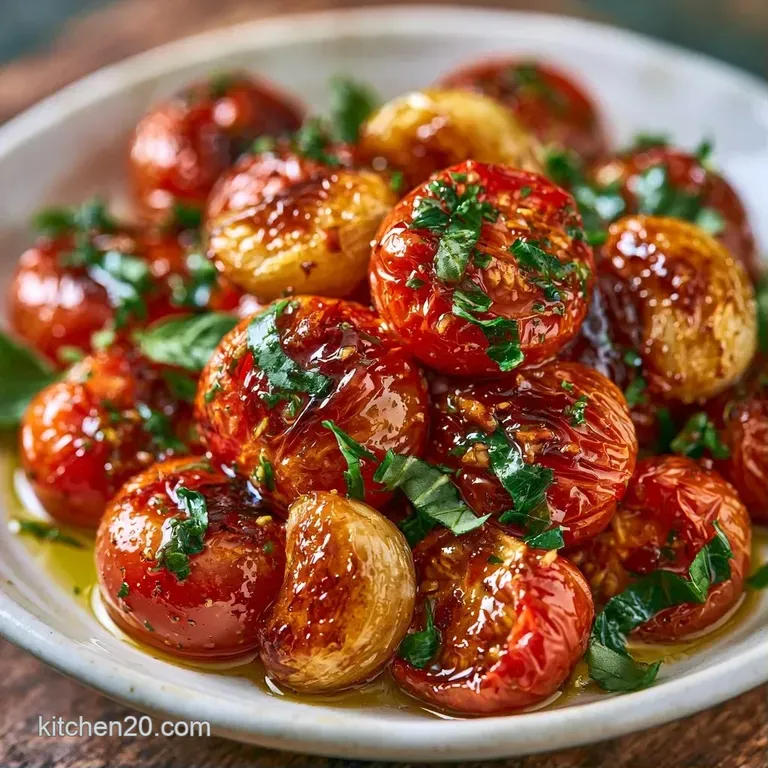
Spread the mixture in a single layer on a parchment lined baking sheet, placing the tomatoes cut side up. Roast for 45 to 55 minutes until the edges are mahogany colored and the texture is velvety. The oil should be bubbling gently around the garlic.
Finishing with Freshness
Remove the tray from the oven. Immediately stir in the fresh basil or thyme while the tomatoes are still sizzling. The residual heat releases the aromatic oils from the herbs without wilting them into nothing.
This batch of Roasted Tomatoes Olive Oil is now ready to be used immediately or stored for later.
Fixing Common Roast Issues
The most frequent issue is timing. Because every oven has its own hot spots, you need to watch for the color rather than just the clock.
Burnt Garlic Cloves
If the garlic is too small, it can brown too quickly and turn bitter. To prevent this, tuck the garlic cloves underneath the tomatoes to shield them from the direct heat of the pan.
Watery Roasted Tomatoes
This usually happens if the pan is overcrowded. When tomatoes are piled on top of each other, they steam instead of roast, leaving you with a soup rather than a jam.
Overcooked Garlic
If the garlic turns dark brown or black, it will taste acrid. Check the tray at the 40 minute mark and move the garlic to the center of the pan if the edges are browning too fast.
| Problem | Fix |
|---|---|
| Bitter garlic | Tuck cloves under tomatoes |
| Watery consistency | Use a larger pan for a single layer |
| Pale tomatoes | Roast for an extra 10 mins |
Storage and Waste Tips
Store the Roasted Tomatoes Olive Oil in a glass jar. Keep them in the cooler for up to 5 days. The oil will solidify slightly in the cold, so just let the jar sit on the counter for 15 minutes before using.
If you have a massive harvest, consider freezing tomatoes before roasting them in the winter. You can freeze the finished roast for about 3 months, though the texture of the tomatoes softens further upon thawing.
Don't throw away the leftover oil in the jar. It's essentially a garlic tomato infused gold mine. Use it to sauté spinach, whisk it into a vinaigrette, or drizzle it over grilled fish.
Roasted Tomatoes Olive Oil Myths
Searing tomatoes at high heat "locks in the flavor." This is a myth. High heat actually burns the sugars and toughens the skin. The slow roast is what creates that deep, jammy concentration.
You need to peel the tomatoes for a smooth result. Not true for cherry tomatoes. The skins are thin enough that they blend into the dish and provide necessary structure so the tomatoes don't turn into a puree.
Simple Flavor Tweaks
You can easily shift the vibe of this dish by changing a few aromatics. For a more Mediterranean feel, swap the basil for fresh oregano and add a pinch of lemon zest at the end.
If you want something punchier, try a balsamic twist. Drizzle a tablespoon of balsamic glaze over the tomatoes halfway through the roasting process. This adds a tangy, syrupy layer to the Roasted Tomatoes Olive Oil.
For those who love heat, add a sliced Fresno chili or a pinch of crushed red pepper to the initial toss. The heat mellows out in the oven but still provides a nice back end glow.
Best Serving Ideas
The beauty of this recipe is its versatility. I love spooning the tomatoes and oil over a thick slice of toasted sourdough. Rub a raw garlic clove on the bread first, then top with the roast and a sprinkle of flaky sea salt.
It's also a fantastic base for pasta. Toss the Roasted Tomatoes Olive Oil directly into hot linguine with some parmesan cheese and a splash of pasta water. The tomatoes break down slightly, creating a rustic, chunky sauce.
For a lighter option, serve them alongside a fresh mozzarella ball. The contrast between the cold cheese and the warm, concentrated tomatoes is a classic combination that never fails.
Recipe FAQs
How to roast regular tomatoes?
Slice them in half and toss with olive oil, smashed garlic, salt, and pepper. Spread them cut-side up on a parchment lined baking sheet and roast at 300°F (150°C) for 45 to 55 minutes.
Where should I use these roasted tomatoes?
They are perfect for topping crostini or stirring into pasta. If you enjoyed the concentrated flavor achieved here, see how a similar roasting process enhances our homemade salsa.
Is it true that roasting requires high heat like 400°F?
Actually, no. This recipe uses a slow roast at 300°F (150°C) to create a velvety texture and mahogany edges without burning the garlic.
What is the cooking duration for these tomatoes?
Roast for 45 to 55 minutes. You are looking for a velvety texture and edges that have turned a deep mahogany color.
Can these be used for a cherry tomato platter?
Yes, they make a stunning center piece. Serve them warm or at room temperature in a shallow dish, drizzled with the leftover garlic infused oil.
Roasted Tomatoes Olive Oil