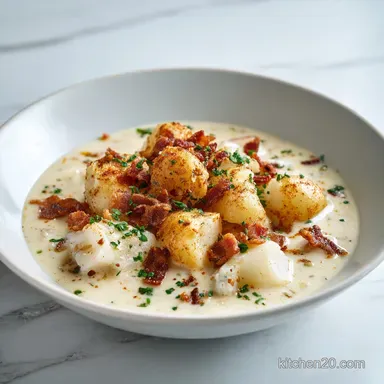
Seafood Chowder Recipe: Hearty New England Classic
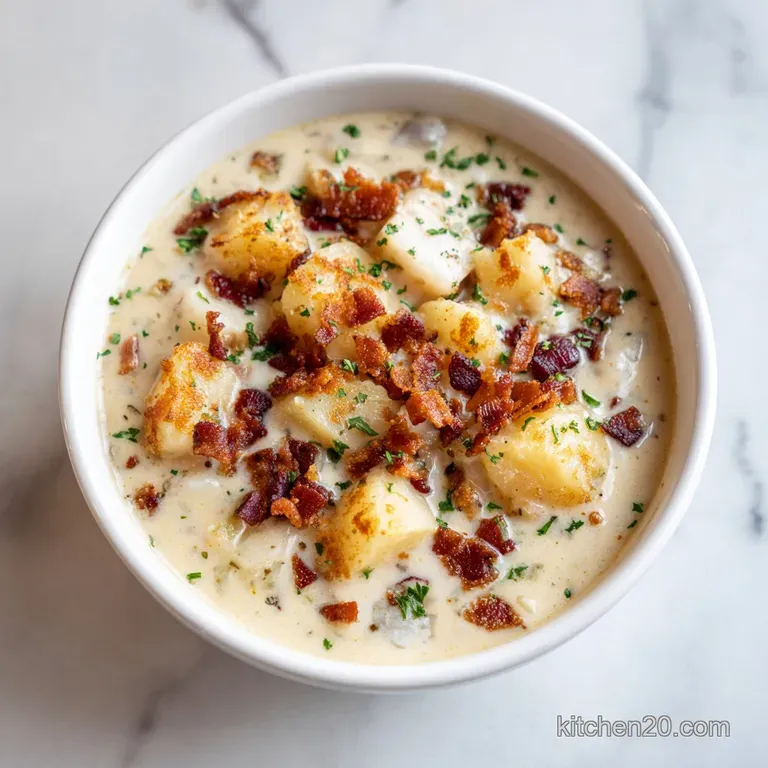
- Time:15 minutes active + 25 minutes cooking = Total 40 minutes
- Flavor/Texture Hook: Silky, velvety broth with shatter crisp bacon and buttery scallops
- Perfect for: A cozy weekend dinner or a coastal themed gathering
- The Best Creamy Seafood Chowder Recipe
- The Secret Behind the Flavor
- Ingredient Guide and Choices
- The Essential Kitchen Tools
- Cooking the Chowder Step-by-Step
- Fixing Common Cooking Errors
- Troubleshooting Common Issues
- Twists and Ingredient Swaps
- Adjusting Your Portion Size
- Fact Checking Chowder Lore
- Storage and Reheating Tips
- The Best Side Pairings
- Recipe FAQs
- 📝 Recipe Card
The Best Creamy Seafood Chowder Recipe
That first scent of smoked bacon hitting a hot Dutch oven is everything. It's that salty, woody aroma that tells you a real meal is happening. I remember the first time I tried making this; I threw everything in at once, and I ended up with rubbery shrimp and potatoes that had basically dissolved into the broth.
It was a cloudy, texture less mess. I realized then that a seafood chowder recipe isn't just about the ingredients, it's about the timing.
The real hero here is the Yukon Gold potato. I've tried Russets, but they fall apart too quickly, turning the soup into a thick porridge. Yukon Golds hold their shape but still release enough starch to give the broth a naturally creamy body.
When you combine that with the bright pop of corn and the silkiness of half and half, you get something that feels luxurious but tastes like a home cooked hug.
This seafood chowder recipe is all about the contrast. You want the saltiness of the bacon to cut through the richness of the cream, and the fresh lemon juice to wake up the delicate scallops. It's a connected experience of flavors, where the sweetness of the corn balances the savory depth of the seafood stock.
Trust me on this, the patience you spend on the "staggered add" is where the magic happens.
The Secret Behind the Flavor
To get this right, we have to look at how the heat interacts with the proteins. Seafood is delicate, and if you boil it for ten minutes, you're eating rubber bands.
Protein Denaturation: Seafood proteins tighten up quickly when exposed to high heat. By adding them at the very end, we use the residual heat of the broth to poach them gently, keeping the texture buttery.
Starch Gelatinization: The flour we stir in at the start creates a roux with the butter and bacon fat. This binds the liquid and prevents the cream from separating, ensuring a silky consistency.
Flavor Layering: We start with the heaviest flavors (bacon) and move to the lightest (lemon and parsley). This ensures the delicate taste of the cod and scallops isn't drowned out by the smoke of the bacon.
Acid Balance: The addition of lemon juice at the end isn't just for flavor. It breaks through the fat of the half and half, making the whole dish feel lighter on the palate.
| Method | Prep Time | Texture | Best For |
|---|---|---|---|
| Fresh Stock | 15 mins | Deep, complex | Gourmet dinner |
| store-bought | 5 mins | Consistent, salty | Weeknight meal |
| Bouillon | 2 mins | Light, thin | Budget cooking |
This comparison shows why I always suggest taking the extra few minutes for quality stock. If you want a truly professional result, using a homemade fish stock transforms the depth of the dish, though a good store-bought version works for a quick Tuesday night.
Ingredient Guide and Choices
When you're gathering your gear for this seafood chowder recipe, don't settle for low-fat versions. The fat is where the flavor lives, especially in a coastal style soup.
For the Flavor Base
- 4 slices (60g) thick cut smoked bacon, diced Why this? Adds smokiness and the essential cooking fat
- 1 cup (150g) yellow onion, finely diced Why this? Provides a sweet, aromatic foundation
- 2 celery stalks (100g), diced Why this? Adds a subtle earthy saltiness
- 3 cloves (15g) garlic, minced Why this? Pungent depth that rounds out the stock
- 2 tbsp (30g) unsalted butter Why this? Necessary for the roux and silkiness
For the Hearty Body
- 3 medium (450g) Yukon Gold potatoes, peeled and cubed into 1/2 inch pieces Why this? Waxy texture that holds shape during simmering
- 1 cup (160g) frozen corn Why this? Sweetness and a bright yellow color accent
- 3 tbsp (25g) all purpose flour Why this? Thickening agent for the velvety broth
- 4 cups (950ml) low sodium seafood stock Why this? The primary flavor vehicle
For the Seafood Mix
- 1 lb (450g) cod, cut into 1 inch chunks Why this? Mild flavor that absorbs the broth
- 1/2 lb (225g) raw shrimp, peeled and deveined Why this? Adds a snap and sweetness
- 1/2 lb (225g) bay scallops Why this? Delicate, buttery ocean flavor
For the Velvety Finish
- 1 cup (240ml) half and half Why this? Balanced richness without being too heavy
- 1 tbsp (15ml) fresh lemon juice Why this? Brightness to cut through the cream
- 1/2 tsp (2g) dried thyme Why this? Earthy herb that complements seafood
- 2 tbsp (8g) fresh parsley, chopped Why this? Fresh green accent and clean finish
- Salt and black pepper to taste
| Original Ingredient | Substitute | Why It Works |
|---|---|---|
| Cod (1 lb) | Halibut or Sole | Similar mild profile. Note: Halibut is firmer and holds shape better |
| Half and Half (1 cup) | Heavy Cream + Milk | Mix equal parts. Note: More richness if using more cream |
| Seafood Stock (4 cups) | Clam Juice + Water | Clam juice is intense. Note: Dilute 1:1 to avoid over salting |
| Bay Scallops (1/2 lb) | Sea Scallops | Larger pieces. Note: Cut into smaller chunks for even cooking |
If you find yourself without cod, you can use a variety of white fish, but avoid oily fish like salmon, as the strong flavor can overpower the delicate scallops in this seafood chowder recipe.
The Essential Kitchen Tools
You don't need a laboratory, but a few specific tools make this a breeze. I always use a heavy bottomed Dutch oven. Why? Because it distributes heat evenly. If you use a thin pot, the flour in your roux can burn in seconds, leaving you with bitter brown specks in your soup.
A sturdy whisk is also non negotiable. When you pour in the seafood stock, you need to move fast to break up any flour clumps. If you don't have a whisk, a fork can work in a pinch, but you'll be working twice as hard.
Finally, a sharp chef's knife is key for the potatoes. You want them in uniform 1/2 inch cubes. If some are huge and some are tiny, the small ones will turn to mush before the big ones are even soft. Precision here means a consistent texture in every spoonful.
Cooking the Chowder step-by-step
Right then, let's get into the actual cooking. Remember, we are aiming for a color balance of golden yellow potatoes, bright green parsley, and deep mahogany bacon.
- Sizzle the bacon. Place the diced bacon in your Dutch oven over medium heat. Cook it slowly until the fat renders out and the bits become crisp and mahogany colored. Note: Don't rush this; the rendered fat is the flavor base for the whole seafood chowder recipe.
- Sauté the aromatics. Add the butter, onion, and celery to the pot. Sauté for about 5 minutes until the vegetables are translucent and soft. Stir in the garlic and thyme for exactly 60 seconds until you smell that fragrant garlic aroma.
- Cook the flour. Sprinkle the flour over the sautéed vegetables. Stir constantly for 2 minutes. You're looking for the flour to lose its raw smell and start to bubble slightly.
- Build the broth. Slowly pour in the seafood stock while whisking vigorously. Add the cubed potatoes. Bring the liquid to a gentle simmer, then cover the pot. Cook for about 10-12 minutes until the potatoes are tender when pierced with a fork.
- Add the corn. Stir in the frozen corn kernels. Maintain a gentle simmer for 2 minutes just to heat the corn through.
- The staggered poach. This is the critical part of the seafood chowder recipe. Add the cod first, then the shrimp, and finally the scallops. Let them poach gently in the residual heat for 3-5 minutes until the fish is opaque and the shrimp are pink.
- The final touch. Remove the pot from the heat immediately. Stir in the half and half, fresh lemon juice, and chopped parsley.
- Season and serve. Taste it first, then add salt and black pepper as needed.
Chef's Note: To get that professional finish, don't let the soup boil once the half and half is in. High heat can cause the dairy to curdle, which ruins that velvety texture we're after.
Fixing Common Cooking Errors
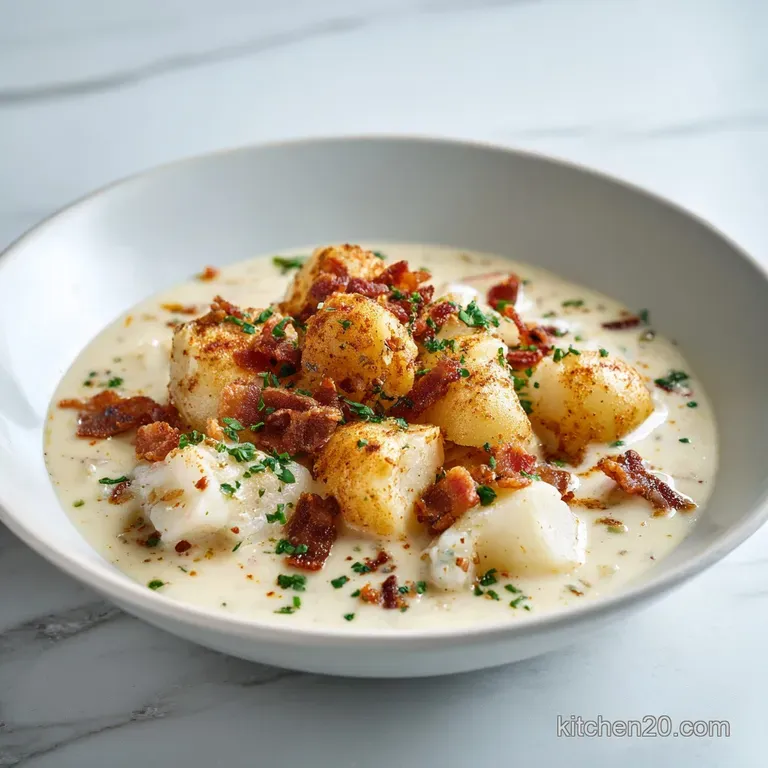
Even the best of us mess up. Maybe your broth is too thin, or maybe your scallops feel like pencil erasers. Let's fix it.
Troubleshooting Common Issues
| Issue | Solution |
|---|---|
| Why Your Broth Is Too Thin | If the soup feels more like a watery broth than a chowder, you likely didn't cook the flour long enough or didn't use enough of it. You can fix this by simmering the soup for another 5-10 minutes with |
| Why Your Seafood Is Rubbery | This happens when the pot is boiling too hard or the seafood stays in too long. Seafood doesn't need to "boil"; it needs to "poach." If you've overcooked it, there's no way to reverse it, but for next |
| Why Your Chowder Tastes Flat | Usually, this is a lack of acid. When a dish has a lot of butter, cream, and potatoes, it can feel "heavy." A squeeze of extra lemon juice or a tiny splash of white wine vinegar at the end will bright |
Twists and Ingredient Swaps
This seafood chowder recipe is a great platform for experimentation. Depending on what you have in the fridge, you can shift the flavor profile entirely.
Adding a Mediterranean Twist
If you want to move away from the New England style, swap the thyme for fresh oregano and add a pinch of smoked paprika. Instead of half and half, you can use a dollop of mascarpone for a thicker, creamier finish. This makes the dish feel more like a coastal Italian soup.
Making it dairy-free
For a dairy-free version, swap the butter for coconut oil and the half and half for full fat coconut milk. Note that coconut milk adds a tropical note, so I recommend adding a bit more lemon juice to balance that sweetness. It still yields a creamy seafood chowder recipe that feels indulgent.
Enhancing the Spice
If you love a bit of a kick, I highly recommend adding some homemade Chesapeake Bay spice blend during the sauté step. The paprika and celery salt in the blend deepen the umami base and give the broth a beautiful orange hue.
Reducing the Sodium
Since seafood stock and bacon are both naturally salty, always use low sodium stock. If you're still worried about salt, you can swap the bacon for smoked paprika and a bit of extra butter to get that smoky vibe without the sodium hit.
Adjusting Your Portion Size
Scaling a seafood chowder recipe is pretty straightforward, but you can't just multiply everything by four and expect it to work perfectly.
Cutting the Recipe in Half When making a smaller batch, use a smaller pot to prevent the liquid from evaporating too quickly. Reduce the simmering time for the potatoes by about 20%, as a smaller volume of liquid reaches temperature faster.
For the seasoning, start with half the salt and adjust at the end.
Doubling or Tripling the Batch If you're feeding a crowd, be careful with the spices. I find that salt and thyme don't need to be doubled; start with 1.5x and taste as you go. Most importantly, work in batches when searing the bacon and sautéing the vegetables.
If you crowd the pan, the vegetables will steam instead of sauté, and you'll lose that essential caramelization.
Baking Adjustments While this is a stovetop dish, some people like to finish their chowder in the oven with a cheese crust. If you do this, transfer the chowder to a baking dish, top with Gruyère, and bake at 350°F (180°C) for 15 minutes.
Fact Checking Chowder Lore
There are a lot of old wives' tales in the kitchen, and seafood chowder is no exception. Let's clear a few things up.
Myth: Searing seafood "seals in" the juices. This is a classic misconception. Searing doesn't create a waterproof seal; it actually lets more moisture out. However, we sear the bacon and aromatics because it creates flavor through browning.
The seafood in this recipe is poached, not seared, to keep it velvety.
Myth: You must boil potatoes separately before adding them. Some recipes suggest this to control the starch. In this seafood chowder recipe, we cook them directly in the stock.
This allows the potatoes to absorb the seafood flavor and naturally thicken the broth, which is much tastier than using plain water.
Myth: All chowders must be white. While the New England style is creamy and white, "chowder" simply refers to a thick soup with chunks of ingredients. Whether it's tomato based or cream based, as long as it's hearty and chunky, it's a chowder.
Storage and Reheating Tips
To keep this seafood chowder recipe tasting fresh, you have to be careful with the seafood and the dairy.
Refrigeration Store your chowder in an airtight container in the fridge for up to 3 days. Because of the cream and seafood, it won't last as long as a vegetable soup. To prevent a skin from forming on top, press a piece of plastic wrap directly onto the surface of the soup.
Freezing Logic Honestly, I don't recommend freezing the finished chowder. The half and half can separate upon thawing, and the seafood, especially the shrimp and scallops, can become grainy and tough. If you must freeze it, freeze the base (everything except the seafood and cream).
Then, thaw the base and add fresh seafood and cream when you're ready to eat.
Reheating Specifics Avoid the microwave if you can. The uneven heat can overcook the seafood pieces. Instead, warm the chowder in a pot over low heat. Add a splash of water or a bit more half and half if the soup has thickened too much in the fridge. Stir gently so you don't break up the cod chunks.
Zero Waste Tips Don't throw away your shrimp shells or scallop remnants! Toss them into a pot with water, a bit of onion, and a carrot, and simmer for 20 minutes to make a quick seafood stock for your next batch of soup. If you have leftover corn, it's great tossed into a summer salad.
The Best Side Pairings
A great seafood chowder recipe deserves the right partners. Since the soup is rich and creamy, you need something with a crunch or a sharp contrast.
The Classic Crunch A thick slice of sourdough bread, toasted with plenty of butter, is the gold standard. The holes in the sourdough act like little sponges, soaking up every drop of that velvety broth. For an even better experience, rub a raw garlic clove on the toast while it's still hot.
The Fresh Balance A crisp green salad with a lemon vinaigrette dressing helps reset the palate between spoonfuls of rich chowder. The acidity of the dressing mirrors the lemon juice in the soup, creating a connected flavor experience.
The Perfect Condiment If you're serving this with a side of grilled fish or shrimp, a dollop of Classic Homemade Tartar Sauce on the side provides a tangy, creamy contrast that works perfectly with the ocean flavors of the chowder.
Beverage Pairings A chilled glass of Sauvignon Blanc or a crisp Chardonnay complements the buttery notes of the scallops. If you're looking for a non alcoholic option, a sparkling water with a squeeze of lime keeps the meal feeling light and fresh.
Recipe FAQs
What three ingredients must a chowder have to be considered a chowder?
Potatoes, a creamy base, and a protein. These three elements provide the signature thickness and heartiness that distinguish chowder from a standard soup.
What are the ingredients for seafood chowder?
Bacon, onion, celery, garlic, butter, Yukon Gold potatoes, corn, flour, seafood stock, cod, shrimp, scallops, half-and-half, lemon juice, thyme, and parsley. These ingredients create a rich, layered flavor profile.
What are common mistakes when making chowder?
Boiling the seafood too aggressively. This leads to rubbery textures rather than a buttery consistency. Another mistake is failing to cook the flour for the full 2 minutes, which leaves a raw taste in the broth.
What makes chowder taste better?
Adding fresh lemon juice and parsley at the very end. The acid cuts through the heavy cream and bacon fat to brighten the overall flavor. If you enjoyed balancing these bright notes, see how we use a similar citrus approach in our crab meat salad.
Why is my seafood rubbery?
The broth was boiling too hard or the seafood cooked too long. Seafood should be poached gently in residual heat. Once the proteins overcook and tighten, the texture cannot be reversed.
How to fix a chowder that is too thin?
Simmer the soup for an additional 5-10 minutes. This allows the flour to further thicken the liquid. Ensure you don't skip the initial step of sautéing the flour with vegetables to ensure proper starch activation.
Is it true that I can freeze seafood chowder for later use?
No, this is a common misconception. Freezing causes the half-and-half to separate and degrades the quality of the shrimp and scallops. Store it in the fridge for up to 3 days instead.
Seafood Chowder Recipe in 40 Minutes