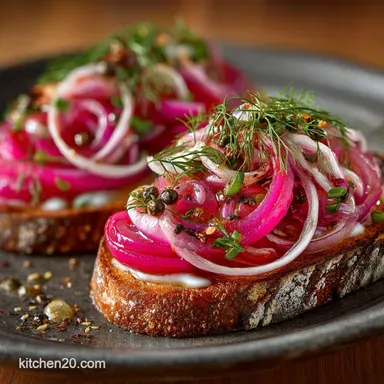
The Speedy Scandi Bright Brassy Quick Pickled Red Onions
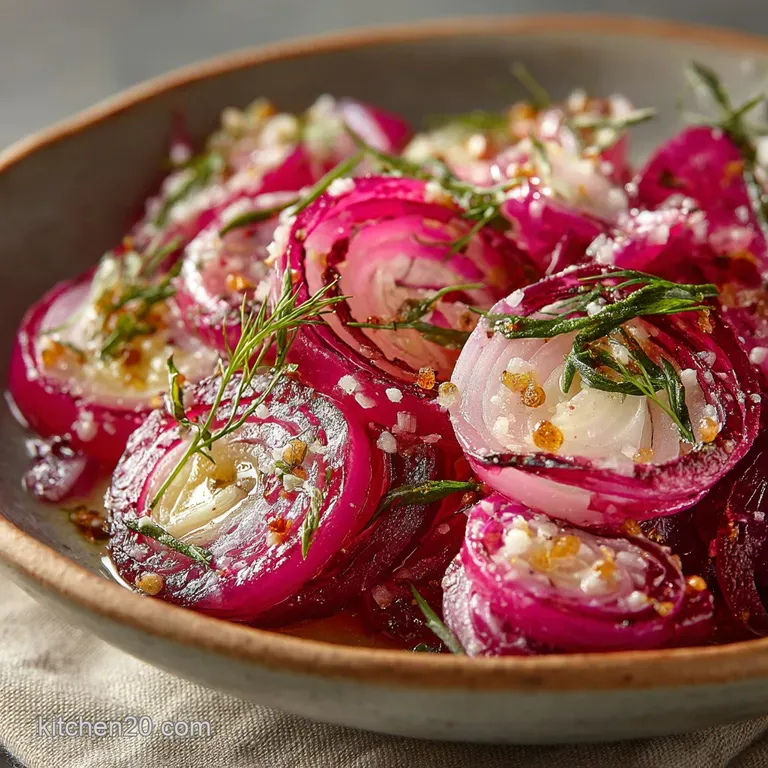
- Banish Blandness: Why Quick Pickling Is the Modern Secret Weapon
- Sourcing Your Components for the Perfect Brassy Brine
- Step-by-Step: Mastering the Homemade Quick Pickled Onions Process
- Advanced Flavor Customization for Your Quick Pickled Onions
- Extending Shelf Life and Nutritional Profile
- Recipe FAQs
- 📝 Recipe Card
Banish Blandness: Why Quick Pickling Is the Modern Secret Weapon
Every chef understands that truly great food demands balance a dance between richness and acidity. While heavy sauces and slow cooked proteins satisfy the craving for comfort, they often fall flat without a sharp, bright counterpoint to cut through the depth.
This is precisely where the concept of quick pickling shines, transforming humble vegetables into dynamic flavor enhancers. Forget the complicated, time consuming canning methods of the past; modern quick pickling is a minimalist technique focused purely on immediate, impactful flavor enhancement.
The resulting product, the glorious Quick Pickled Onions , serves as a vibrant, crunchy, and tangy garnish ready to elevate virtually any savoury dish in under an hour.
From Slice to Crunch: Defining the 'Quick' Pickle
The primary distinction of the "quick" pickle is its speed and simplicity. Unlike traditional fermentation or full scale preservation, which requires careful long term sterilization and often weeks of resting time, this method relies solely on the immediate transformative power of hot, high acidity brine.
The heat slightly wilts the onion, softening its harsh bite while the vinegar instantly infuses it with punchy flavor and vibrant color. This means that from the moment you start slicing to the first satisfying crunch, the total process takes a mere 45 minutes, making this quick pickled onions recipe an ideal solution for last minute meal preparation.
If you can measure and boil water, you are fully equipped to master this technique, proving that gourmet flavor doesn't require complex chemistry.
The Essential Flavor Foil: Pairing the Tang with Richness
The inherent sharpness of these onions makes them the unsung heroes of the modern plate. Their intense acidity acts as a palate cleanser, perfectly balancing dishes that are otherwise heavy, creamy, or fatty.
For instance, piling a heap of these crunchy condiments onto pulled pork or a dense beef brisket sandwich transforms the experience from satisfyingly rich to brilliantly complex. They are, of course, absolutely non-negotiable as quick pickled onions for tacos , where they provide essential textural contrast and a zing that complements seasoned meats and creamy guacamole.
Even something as classic as a Club Sandwich is improved dramatically by swapping out plain lettuce for the bright pink crunch of these brassy slices.
Sourcing Your Components for the Perfect Brassy Brine
Success in quick pickling comes down to high-quality ingredients and precise ratios. While the process is easy, the components must be respected to ensure both safety and maximum flavor output.
Selecting the Best Red Onions for Vibrant Colour
While you can technically pickle any onion variety, the Quick Pickled Red Onions are universally preferred for two key reasons: their slightly milder, sweeter flavor profile compared to yellow onions, and their stunning aesthetic appeal.
The anthocyanins (the pigments responsible for the red/purple color) react beautifully with the vinegar's acid, transforming the rings into that unmistakable, vivid, electric pink hue.
A single large (or two smaller) red onion, yielding about 300g, is generally sufficient for a standard jar, providing about 8 to 10 generous servings.
The Chemistry of the Brine: Vinegar-to-Water Ratios
The key to a reliable, flavorful, and safe pickle lies in the perfect 1:1 ratio of liquid components. We require 1 cup (240 ml) of filtered water combined with 1 cup (240 ml) of vinegar.
For this recipe, either standard white wine vinegar or the slightly fruiter, more mellow profile of quick pickled onions with apple cider vinegar works exceptionally well. Crucially, the chosen vinegar must maintain an acidity level of at least 5% to properly inhibit microbial growth.
We balance this strong acidity with 2 tablespoons of granulated sugar and 1 teaspoon of Kosher salt (adjusting to 3/4 teaspoon if using denser table salt), which mellows the sharpness and enhances the overall "brassy" flavor without making the product sweet.
Required Minimalist Equipment: Jars and Cutting Tips
One of the great joys of this preparation is the minimal equipment required. You will need a small, non-reactive saucepan (stainless steel or enameled is ideal) to heat the brine. The final resting place for the onions must be a clean, heat proof jar of approximately 400 500 ml capacity with a tight fitting lid.
While a sharp chef’s knife works fine, to achieve the crucial, consistent, paper thin 1.5 2 mm slices which ensure uniform texture and pickling rate investing in a mandoline slicer is highly recommended. Uniformity truly is the secret to a professional grade pickle.
Related Recipes Worth Trying
- Seriously Quick Chocolate Mug Cake Recipe Molten Centre in 90 Seconds — Your emergency Chocolate Mug Cake is here This foolproof Mug Cake For One delivers a moist dark chocolate sponge and gooey molten core in under 5 minutes...
- Seriously Fluffy 2Ingredient Biscuits Recipe Quick Baking — Need a quick bake fix These 2Ingredient Biscuits are utterly foolproof achieving a beautiful fluffy texture with just yogurt and flour Perfect comfort food...
- Gruyère Stuffed Tennessee Onions Recipe Savoury Comfort Bake — Elevate your sweet Vidalia onions into smoky cheesy parcels This delicious onion bake recipe is rich and deeply comforting See how easy it is
Step-by-step: Mastering the Homemade Quick Pickled Onions Process
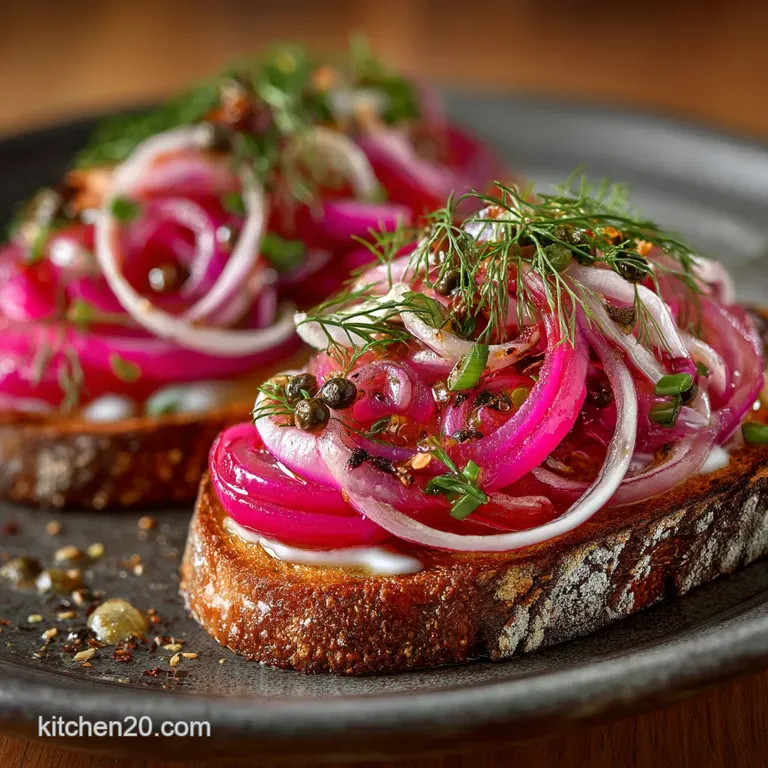
The journey from pungent raw onion to bright, ready-to-eat pickle is remarkably fast, involving only four core stages that are easily accomplished in the kitchen.
Uniformity is Key: Preparing the Razor Thin Onion Slices
After peeling and trimming the ends of the red onion, the preparation begins with the careful slicing. Whether using a knife or mandoline, aim for slices that are translucent and consistently thin. Once sliced, tightly pack the entirety of the onion volume into the prepared heat proof jar.
It should be pressed down firmly even slightly squashed because the volume will dramatically reduce as soon as the hot liquid is introduced. A tight pack ensures the greatest yield and minimizes the amount of liquid needed to fully submerge the contents.
Heating the Scandi Brine: Achieving the Right Simmer
In your small saucepan, combine the measured water, vinegar, sugar, and salt. Place the pan over medium high heat and whisk constantly. The goal here is twofold: first, to ensure the solid components (salt and sugar) are completely dissolved, and second, to bring the mixture to a rapid, rolling boil.
This should take about five active minutes. As soon as the brine is vigorously boiling, immediately remove it from the heat. This "kissing hot" brine is necessary to initiate the cooking process for the onions quickly once poured.
The Transformation Phase: Pouring and Submerging
Carefully pour the scalding brine directly over the packed, raw onions in the jar. Pour slowly to allow air bubbles to escape. Once the jar is filled, use the handle of a wooden spoon or a small weight to gently press the onions down, confirming they are fully submerged beneath the liquid line.
This contact with the hot brine is what triggers the instant softening and the beautiful pigment transformation. Leave the jar uncovered on the counter to cool completely to room temperature, which typically takes around 30 minutes. Once cool, secure the lid and transfer to the refrigerator.
While technically edible after just 15 minutes of chilling, the flavor deepens considerably after a minimum of two hours. Since this is purely a brine infusion and requires minimal cooking, it can accurately be called a quick pickled onions no cook preparation.
Advanced Flavor Customization for Your Quick Pickled Onions
Part of the fun of making your own pickles is the ability to easily adapt the baseline flavor profile. The standard recipe provides a perfect tangy canvas for further experimentation.
Customizing Your Heat Profile with Whole Spices
Introducing whole spices is the easiest way to add complexity. Before pouring the hot brine, toss a half teaspoon of red pepper flakes or a few cracked black peppercorns directly into the packed onions.
For a more intense, fresh heat, thinly sliced jalapeños or serrano peppers added to the jar result in excellent quick pickled onions and jalapenos —perfect for those who appreciate an extra fiery kick on their nachos.
For a richer, savory undertone, try adding two or three lightly crushed garlic cloves and a bay leaf to the jar.
Substituting Sugar: Maple Syrup and Honey Alternatives
If you prefer to avoid granulated sugar, or wish to impart a richer molasses note, the sweetener in the brine is easily substituted. You can use approximately 1.5 tablespoons of liquid sweeteners, such as high-quality maple syrup or honey, in place of the white sugar.
Be aware that liquid sweeteners, especially honey, may slightly cloud the finished brine, but this has no negative impact on the flavor or texture of the finished pickle.
Extending Shelf Life and Nutritional Profile
Best Practices for Refrigerated Storage and Maximum Freshness
It is essential to remember that these Quick Pickled Onions are refrigerator pickles; they have not undergone the extensive processing required for shelf stability. Therefore, they must be stored chilled at all times.
Kept sealed in the refrigerator, they maintain their peak crunch and vibrant flavor for up to two weeks. A useful tip to prevent spoilage and maintain freshness is to always retrieve the onions using clean utensils, avoiding contamination of the liquid.
Don't waste the remaining brine once the onions are devoured; the leftover liquid is wonderfully acidic and can be whisked with oil and mustard to create an excellent salad vinaigrette.
Calories, Carbs, and the Benefit of Fermented Foods (A Note on Nutrition)
One of the great benefits of using these onions as a garnish is that they deliver huge flavor with very few calories. Based on an estimated 10 servings per batch, each generous portion contains approximately 30 kcal and 6 grams of carbohydrates.
While they are high in acidity and beneficial for flavor, it’s important to note they are preserved via acidification, not true long term microbial fermentation, so they do not offer the extensive probiotic benefits associated with traditional fermented foods like sauerkraut or kimchi.
They do, however, provide a lovely, low-sodium way to enhance flavor without adding fat.
Beyond the Taco: Creative Applications for Your Brassy Batch
While their natural home might be Mexican cuisine, the utility of these tangy slices extends far beyond. Try scattering them over creamy, rich dishes like potato or egg salad for a needed textural lift.
They make a superb addition to any cheeseboard, providing a crucial acidic break between rich, aged cheeses and cured meats. On top of that,, they can transform simple weeknight meals; try draping them over grilled salmon, using them to garnish deviled eggs, or floating a handful atop a smooth, pureed cream of tomato soup for a brilliant pop of color and unexpected crunch.
Recipe FAQs
Right then, how long will these Quick Pickled Onions keep in the fridge?
Since these are genuine Quick Pickled Onions and not a traditional canning project, they rely purely on the acidity and refrigeration for preservation. Keep them tightly sealed in a clean, sterilised jam jar in the fridge.
They’ll be absolutely tip-top for about two weeks, though often the wonderful crunch starts to fade slightly towards the end of that period.
Mine haven't gone bright pink, what have I done wrong?
Don’t panic it’s usually down to the temperature of the brine or the thickness of your slicing. For that fantastic vibrant pink colour, the brine must be aggressively hot when poured, as this heat is crucial for reacting with the red pigments in the onion.
Also, make sure you slice the onions paper thin (using a mandoline is a proper bit of kit for this!), as thicker slices don’t absorb the colour change quickly.
I only have malt vinegar on hand will that work for the brine?
While malt vinegar gives a lovely, deep flavour, it can sometimes be too strong, murky, or less acidic for quick pickling, which might compromise the stability and the bright colour. It's truly best to stick to white wine, apple cider, or standard distilled white vinegar for consistent results.
Ensure the vinegar is at least 5% acidity for the best preservation punch.
Besides tacos, what else should I serve these acidic little marvels with?
These onions are the ultimate counterpoint for richness! Try piling them high on a hefty fish finger sandwich or using them to jazz up a standard cheese and ham toastie the tang cuts right through the fat.
They are also brilliant scattered over scrambled eggs on sourdough or mixed into a hearty potato salad for an extra zing when barbecuing.
Should I chuck the leftover brine when the onions are finished?
Heavens, no! That leftover pink 'vinegar juice' is liquid gold; we call it "pink lemonade" around here! You can use it as a tangy base for a vinaigrette just whisk in some olive oil, a dash of mustard, and pepper.
It also works wonderfully as a marinade for quick chicken skewers, adding tenderness and a lovely subtle onion flavour.
45min Quick Pickled Red Onions